Reviews · Theatre · Thespian Thoughts

Talking Heads Live: ‘Bed Among the Lentils’ Review

Up next in my ‘Thespian Thoughts’ series, is my review of the second monologue that I saw at the Bridge Theatre.

After a quick change of the set – the sink and kettle are removed, and an array of chairs added – we are graced with another one of Alan Bennett’s monologues, and this time it is Bed Among the Lentils. This piece is legendary within Bennett’s repertoire, known for previously having been performed by Dame Maggie Smith in 1988, on the BBC. However, this time round, the piece is being performed by Lesley Manville… who takes on the challenge and definitely wows the audience!

The Bridge Theatre’s Repertoire of Plays

In Bed Among the Lentils, we meet Susan. She is a vicar’s wife… although even to label her as that is tricky. I got the sense that she doesn’t like to feel owned by her husband, plus she pretty much admits that she doesn’t believe in God. Susan talks about her life – it sounds dull and boring, unadventurous and her life is generally confined to the church.

However, eventually Susan begins to move away from her role as the stereotypical vicar’s wife – she skives from evening prayer, doesn’t care much care for the flower arranging and absolutely despises the clergy full of her husband’s faithful followers. Instead, she begins venturing into Leeds, where during her dalliances, she discovers a small corner shop owned by a young man, whom she refers to as Mr. Ramesh. Soon enough, after every inconvenience and every snide comment from Mrs. Belcher or Mrs. Frobisher, she finally snaps… and her relationship with Mr. Ramesh becomes… intimate. Good for Susan, I say!
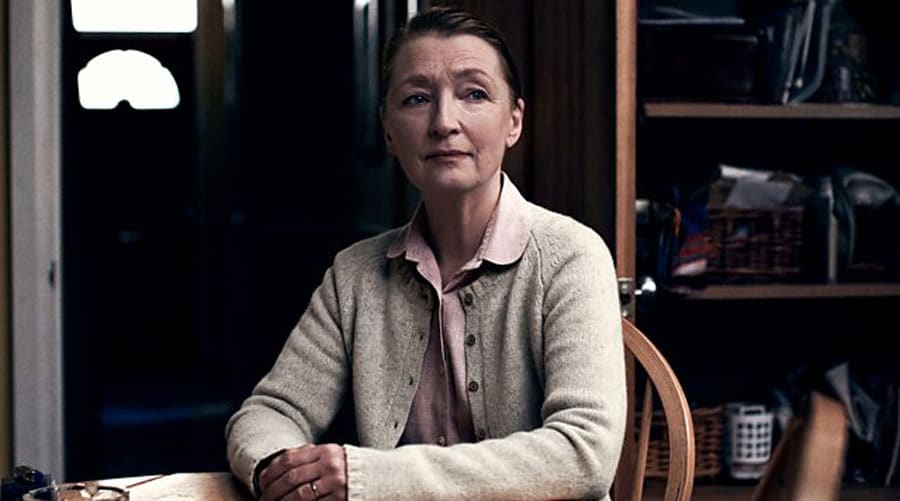
REVIEW: Bed Among The Lentils, Talking Heads, BBC iPlayer
Lesley Manville as Susan, in ‘Bed Among the Lentils’

But that is not the whole story…

Throughout the entire piece, you get a glimpse of a wine bottle or hear a clink of something from a carrier bag and during her time with Mr. Ramesh, it is revealed that she is an alcoholic. Not only does Susan battle with her commitment to the church, but also with her commitment to the bottle. Luckily, her guardian angel, Mr. Ramesh convinces her to seek help – which she does. By the end of the piece, we hear of Susan’s AA meetings. Mr. Ramesh has travelled back to India and her husband is taking all the credit for helping his poor alcoholic of a wife. I can’t help but feel sorry for Susan – she is trapped, unhappy and her spark of adventure is over. She is back at where her story started – in an uncomfortable marriage although this time, she is a bit more sober.

Lesley Manville captured Susan extremely well in this performance – she really convinced the audience that Susan was a timid, plain old women who pretty much served no higher purpose other than her husband. At the same time, she also made sure that the comic sections and taboo parts (like sleeping in a store room with Mr. Ramesh…oops), were strong and heart-warming for the audience. Also, Manville moved around the set effortlessly (her monologue featured more costume changes and intervals where the set was altered) and managed to keep the audience intrigued, despite the background action. In particular, I think Manville portrayed Susan’s calm exterior persona very well, but then was able to relinquish her inner rage as well. The sections which featured pure irritation and a sense of entrapment were really strong.

Without a doubt, the monologue/one-character play form is so brilliant here. We get to see two sides to Susan – the one society sees and her actual personality. Bennett captures this inner conflict so well through his language, sequencing of events and the digressions Susan makes. Especially, with this performance, Manville heightens the emotion really well and the audience clearly see this infuriating division of the self.

(This monologue was the second of a double-bill – the first being The Shrine. If you would like to read my piece on The Shrine, performed by Monica Dolan, then you can click here.)

Thespian Thoughts

Socially Distanced Theatre-ing

To kick off my ‘Thespian Thoughts’ series, I thought that I would blog about what it was like to experience the theatre with new kind of set up, thanks to the coronavirus pandemic. Last week, after having not stepped into a theatre for 195 days, I finally went to see my first socially distanced live performance. I travelled down to London’s Bridge Theatre, and got to see how the theatre environment had completely changed… it was different, exciting and unexpectedly… quite emotional!

Outside of the Bridge Theatre – located on Potters Field Park

The Bridge Theatre is one of the first theatres to reopen its doors to the public, and begin showcasing works in a socially distanced manner – they have adapted their flexible auditorium, converting it into a space with 250 socially distanced seats.

For the past few weeks, the theatre has been hosting a collection of monologues and one-character plays, performed (and in some cases, written) by an array of Britain’s finest acting talent. The repertoire kicked off with Beat the Devil, written by David Hare and performed by Ralph Fiennes. This piece has already received high praise and four-star reviews. Currently underway are Alan Bennett’s Talking Headsthey were seen on TV earlier this year, having been filmed and produced during the pandemic, by the BBC. Eight of the twelve monologues are being performed in double-bills at the Bridge Theatre, including one of Bennett’s new pieces, and some of his most prestigious work. The cast include: Monica Dolan, Tamsin Greig, Lesley Manville, Lucian Msamati, Maxine Peake, Rochenda Sandall, Kristin Scott Thomas and Imelda Staunton. Later on, in the season, the Bridge will host more distinguished monologues, including Quarter Life Crisiswritten and performed by Yolanda Mercy. As well as, Nine Lives, written by poet, Zodwa Nyoni and performed by Lladel Bryant.

The Bridge Theatre’s Repertoire

Of course, in order to showcase such works, the Bridge Theatre have worked hard to enforce social distancing measures and enable people to finally get back into theatre. Here are some notable changes that have been made:

The first change is have staggered times of entering the theatre. This helps to reduce crowding, inside and outside of the building, as well as allowing people to meet the ‘two-metre’ rule at all times. When booking tickets, you are allocated a certain time to arrive. Subsequently, this allocated time also determines what time you enter the auditorium.

The Bridge Theatre’s Foyer

Another smaller, yet very efficient change, is to allow audience members to pre-book drinks for before and during the performance – on the morning of your performance, the Bridge text message you with a link to do this. This message also reminds you of your allocated time, the door which you should enter when going into the auditorium and your seat numbers. This isn’t a huge change, but I thought that it was really effective and helped you prepare for an overall smoother and less stressful visit.

Upon arrival, staff also explained how to maintain social distancing with their one-way system, about the required temperature check and when/where to wear your mask.

Then, onto the actual performance…

Inside the Auditorium

At all times, you are asked to wear a mask when in the auditorium – understandable, especially as the performers are not wearing PPE. Then, after being called, you can finally go and find your seats. There were a few stewards around the entrances and in front of the stage, reminding people to keep their masks on.

The auditorium was really strange to see!

Hundreds of seats were missing. Not many people were there and it was a lot quieter than your usual theatre.

There were seats in couples, groups of three and some single seats scattered around the space, all maintaining a safe two metres.

After finding my single seat (yes… theatre is just as fun when you are on your own), it was such a surreal experience. For me, it felt amazing to finally be back in this kind of environment and supporting an industry that is suffering immensely due to the pandemic – it gave me a tiny glimpse of hope that the arts sector would make it out on the other side… but, who knows, I may have just suddenly been feeling optimistic because I was sitting in front of a stage.

Also, watching something like Talking Heads (I saw the double-bill of ‘The Shrine’ and ‘Bed Among the Lentils’, performed by Monica Dolan and Lesley Manville – a review will be coming soon), as something which I had both read and watched during lockdown boredom and for dissertation research, everything suddenly felt more real, and it was crazy to have these incredible piece’s being performed in front of me. I think by the time the Talking Heads theme tune began… I was pretty excited!

Of course, there were some downfalls of having to experience the theatre like this. It was less immersive and at points, it was hard to connect with the storylines and the performances, because you were so overwhelmed with this newly founded way of watching theatre. Also, the theatre was still quite bare. Perhaps, naively, I thought more people would be bursting to watch something live (I know, I was!), so perhaps there is still some uncertainty and anxiety about coming back to experience the arts.

There was definitely an added pressure to these performances – for both the audience, to maintain public safety, but also on the performers. I think the actors felt an immense pressure, but also gratitude, with being involved in any kind of live performance – especially when performing such renowned pieces of writing.

What I didn’t expect was the emotion throughout the room. Dolan and Manville were both extremely raw with performing their emotions – their characters were either attempting to overcome grief, or alcoholism and strenuous relationships. I feel that the emotion was heightened given our surroundings and with the themes the pieces both explored, and overall they both gave such heartwarming and beautiful performances. I am certain that everybody at the Bridge Theatre, during every laugh, cry and deep thought, were absolutely thrilled to be able to see such exceptional performances.

Overall, I would highly commend the Bridge Theatre at how they are enabling safe access to the theatre. Every moment you are in the foyer, auditorium or outside of the building, you feel safe. I would definitely recommend going to see a performance at the Bridge, just to attempt to get back into any kind of live performance whatsoever – especially as we need to begin to appreciate such a fragile industry and support it any way we can! These pieces were new and restorative, and after seven months without any in-person theatre… it was absolutely something I needed!

(I have inserted links to the Bridge Theatre and its repertoire throughout the blog – make sure you check them out!)

Thespian Thoughts

Thespian Thoughts

Oh no… she’s starting a new blog series…

Photo by Pixabay on Pexels.com

After writing all about my ‘Pandemic Ponderings’ back in May, I have decided to begin a completely new series of blogs, called ‘Thespian Thoughts’.

The word thespian, as a noun, can mean actor and as an adjective can relate to drama and theatre in general, so you guessed it… for the next few weeks/months this blog is purely dedicated to the theatre world (and mostly how I am coping without it!).

This idea came to me a few weeks ago, but then after my first socially distanced theatre trip, a few days ago, I thought that I should actually give it a go! I’m hoping to get back into the swing of writing (after such a loooooong break) and this blog gives me the space to rave and rant as much as I like! Expect reviews, even more overdue reviews from online theatre, and some interesting concepts and ideas that I come across when researching for my dissertation.

Wish me luck…

Reviews · Theatre

Mood Music – Review

Since theatre has become strictly an online event, the likes of the National Theatre and the Royal Shakespeare Company have become some of the front runners of streaming their past performances. However, some smaller (and even some regional) theatres have also joined in! And a few weeks ago, we were given the opportunity to watch the Old Vic’s 2018 performance of Mood Music.

Mood Music | The Old Vic
Source: https://www.oldvictheatre.com/whats-on/2018/mood-music
Ben Chaplin and Seána Kerslake

Mood Music was written by Joe Penhall – the writer of Olivier Award Winning Musical, Sunny Afternoon (2014) and stage plays, Blue/Orange (2000), Dumb Show (2004) and Birthday (2012). It starred Ben Chaplin, Seána Kerslake, Pip Carter, Kurt Egyiawan, Neil Stuke and Jemma Redgrave. As someone who wanted to see the play back in 2018 (but was in the middle of A Level exams), I was very excited that we were being graced with this performance! Also, as someone interested in contemporary performance and the character of a psychologist or therapist in theatre, I knew that this was a must-see piece!

In the play, we are introduced to two figures of the music industry, Bernard (Ben Chaplin), a music producer and Cat (Seána Kerslake), a young and promising musician. They are in the midst of a legal battle over who owns a song. We hear both sides of the story, as they discuss the situation with their therapists (Pip Carter and Jemma Redgrave) and we also see the constant debate between their lawyers (Neil Stuke and Kurt Egyiawan). The inner demons of the characters are drawn out by their therapists, who delve into Bernard and Cat’s relationships, mental states and family situations. Whilst their lawyers offer a new level of severity to the situation and present how toxic working relationships and legal battles are frequently happening within the industry.

Images from https://www.oldvictheatre.com/whats-on/2018/mood-music#event-media-gallery

The main characters are really interesting, mostly because we see the good and bad parts of them. Firstly, Bernard, who is quite egotistical in his role as producer. For the audience, particularly at the start, I think he comes across as quite manipulative, especially with his relationship with Cat. However, as the play goes on, we see he is more complex than first expected, especially due to his relationship with his ex-wife. He also frequently uses humour to cover how uncomfortable he is when talking about his feelings. Fortunately, his therapist, Ramsay, eventually manages to help him open up.

Secondly, the character of Cat. She is young, aspiring and extremely creative. She often questions her position both as an artist in the music industry, and as a young woman. She talks about her experiences of being controlled and manipulated when on tour, and I think that she is extremely brave to confront an unequal and powerful industry. Her therapist, Vanessa, perhaps is the most understanding, as a woman herself, and helps the audience to sympathise with Cat’s awkward position.

The conversations between musician and therapist, musician and lawyer, and then musician and musician, all happen at the same time – all of the action has been intertwined, and their situations and individual ideas are overlapped onto one another. I think that Joe Penhall writes this really well, and somehow despite the constant moving of action and the changing of narrative and perspective, it still remains pretty easy to follow for the audience.

An example of the staging – when the characters are ‘cross-talking’ in Mood Music.

For me, one of the stand-out parts of Mood Music was the unique staging. As mentioned, there was constant moving about of the characters and seating, and I think that this chaos and complexity almost reflected the drama and severity of the situation. Notably, a very interesting section of the performance was when the two musicians and two therapists were all sat in a square (see my diagram above). There were two separate conversations happening between patient and therapist (on the diagonal), but the subject matter frequently overlapped, which I though was really interesting.

The conversations involved the other character and were paralleled in subject matter. I think this set-up really helped to see that the action and plot is shared between these two main figures, and that Bernard and Cat were a lot more similar than they think – in their stubbornness and creativity. The director, Roger Michel did a great job in making sure the action was easily understandable and to make sure the focus was on Bernard and Cat, who were positioned at the very front of the stage. For me, it helped to see that the drama was central to these characters.

Also, at the back of the stage, there were four chairs, and if the action didn’t involve either therapist or lawyer, then they would sit at the back of the stage – almost to make sure the audience knew that they should focus on the main characters and their interaction. By the end of the play, the therapists and lawyers all finish the piece by playing instruments, as a way to bring calm the the conclusion. The motif as music as a restorative and reflective medium is definitely shown throughout.

I would definitely recommend Mood Music, as it really explores the strains of the music industry and the impact mentally, personally and professionally, very effectively. It had a stellar cast, who illustrated all of these complexities very well and who had me hooked for the entire duration.

Activism · Theatre

The Arts in the Time of Corona

The Coronavirus pandemic has engulfed the world in recent weeks – causing devastation and destruction to society. With the Government attempting to reduce the speed of infection through social distancing and isolation, it has meant the arts have recently taken a massive blow. This is from the Broadway and West End having to close to small local theatres not knowing what the future may hold for their businesses.

I saw this at the Tate Modern about a month ago and I definitely think it is resonant in what is happening today – that we should consider everyone rather than just ourselves, and that the vision of artists are still and always will be important.

Of course, the correct decision was taken to suspend theatrical works around the world, but that is not to say that it will heavily impact creatives, actors, scheduled performances, as well as audiences who had planned on seeing these pieces of theatre.

The huge amount of self-employed actors is unimaginable. This week, on social media, I have seen actors having to move out of there homes because of a lack of income and others who are devastated at their shows being unable to continue, or even begin – but there are still ways to help ensure the future of these artistic spheres.

Here are a few ways in which we can contribute:

1) Rebook your refunded tickets.

Of course, there is no certainty to when these theatres will reopen, but by rebooking, at least we can ensure advance payment to theatre venues.

2) If you are attending small theatre venues – don’t ask for a refund of the cancelled shows.

Small theatres like London’s Arcola Theatre, already charge little for amazingly unique and brilliant performances, if you can afford to not claim a refund then this small contribution will ensure theatres like The Arcola can stay open, and continue paying it’s staff. Of course, don’t put yourself out of pocket doing so!

3) If you can, donate to the theatre.

There are many theatre charities to support – supporting the survival of businesses and helping out unemployed actors. Here are a few links to some of them:

www.actingforothers.co.uk

www.actorsbenevolentfund.co.uk

www.ctbf.co.uk

www.mbf.org.uk

www.royalvarietycharity.org 

www.equity.org.uk

4) You can still engage in the theatre – don’t stop!

The theatre is such an important place – people, even during war time, would use the theatre as a mode of escape. You can read plays (I can readily make suggestions) – this way you are still supporting playwrights and the theatrical publishing industry – discuss theatre with your friends, sings musical ballads really loud (so much you will annoy the rest of your family in the house), but also some organisations are looking to bring theatre alive online.

Some companies are looking to broadcast theatre right to your laptop or tablet – to help people in these distressing times. Venues such as the National Theatre are considering making available some performances which have already been filmed.

These four points highlight just how necessary the arts are for both the individual and the collective – and in this current climate, we need more collaboration than anything. We need people coming together, working as one unit – by following Government guidelines, despite whether we agree or not, be respectful of infection and people around you, rather than being individualistic and causing more issues in the long run (and yes, I am talking about those scaremongering and panic buying).

I think it’s important to mention that it’s not only theatre which is a great mode of distraction – there are so many other way of artistically spending your time.

– Write a blog
– Draw
– Learn calligraphy
– Write a short story
– Attempt (and in my case, fail) writing some poetry

These next few months need for us to ensure the survival of our artistic sector, and work collectively and creatively to help one another.

Please support the arts and don’t panic.