After a very loooong break from this blog, I thought that it may be good to revitalise my series of ‘Thespian Thoughts’, get back into writing before my next degree, and finally start adding all of the theatre reviews that I have written over past six months or so.
There will be reviews from plays I have watched or read… the posts will just be small pieces gathering my thoughts, giving brief overviews, some stand out quotes, and my sharing overall opinions….
Sarah Kane’s 4.48 Psychosis is not an easy play to read, to watch or even to think about, most notably because it has been described as Kane’s ‘suicide note’. This play was fist performed at the Royal Court, Jerwood Theatre in 2000, however by the time of its first performance, Kane had sadly committed suicide. Since it’s first performance, many adaptations have taken place around the world and despite its uncomfortable themes, it still remains one of Sarah Kane’s most popular pieces of writing. It may be a difficult play to tackle, but what it does give you is a window into the life of someone in distress and pain, perhaps showing the audience an image that they have never come across before. In the case of 4.48 Psychosis, it really begins to show us how theatre and performance can be used to make society aware of the difficulties in which people are actually living through – and Kane does this through shock-factor, allowing an audience to hear dark thoughts and talking about themes which (even within in-yer-face theatre) can be uncomfortable for a spectator. Kane’s work finally begins to show that illness is not just about what you can see on the outside, but that it is deep, complex and often invisible to others.
Sarah Kane
What is immensely unique about this play is that it has no set characters or (linear or clear) plot we may argue. In Kane’s first production, three actors are onstage and take turns in performing this strange sequence of pain and confusion. From looking at many productions of this play, it is not always completely clear if this stream of dialogue is centred around one character (or patient), or if this movement between actors represents multiple patients describing what trauma they are going through. However, when first looking at this play, I saw myself interpreting this collection of voices as a single character – a single character showing just how expansive and chaotic mental illness can be and that it triggers multiple responses. These different voices explore themes and issues of trust, body dysmorphia, relationships, as well as connections to faith. No matter what Kane’s intention was regarding the number of characters, I think the most interesting idea is how this multitude of voices all work together to illustrate an overwhelming result and display of emotion.
If you look at 4.48 Psychosis on a page, it doesn’t make much sense. It is an amalgamation of single words, whole sentences, uncertainty, long and drawn-out pauses and to piece it together can be difficult – especially if we tackle it from a traditional or Aristotelian perspective. But I suppose that is what makes Kane such as genius – it is not just the language and the acting which offers the audience a window into the subject matter, it is the structure and composition of the writing which also communicate these ideas. In order to describe the upmost panic and disjointed feelings, which Kane herself was going through, she creates theatre which is illustrative of all her problems and makes use of every dramatic element to describe these harrowing feelings. This is the kind of theatre that performers, dramaturgs and theatre practitioners would have a field day with! Through Kane’s writing – the form, genre and stylistic decisions – she really illustrates the complexities of the inner mind.
This piece made me reflect on the one-character play – a dramatic form which was the centre of my undergraduate research and dissertation. In my thesis, I argued that the one-character form is perhaps one of the most effective ways for a playwright to capture the mind of a character and also as a form which frequently unveils aspects of culture which are hidden, considered taboo or privatised by society. This dramatic form offers a relationship between performer and spectator which many other forms can’t necessarily establish as effectively, such as an ensemble piece which doesn’t allow this concentrated relationship or direct communication.
In my research, I explored how as a consequent of this audience-performer connection, there was an opening for discussions on topics such as the sexualisation of culture, the representation of the body within society and (an idea we can compare with 4.48 Psychosis) the ability to have a closer investigation into the state of the mind. For example, in the iconic one-character play, Krapp’s Last Tape by Samuel Beckett, the audience bear witness to Krapp’s private behaviours, actions, movements and thoughts (which arguably happen through the tapes as well as his gesticulations). Beckett stages a personal moment belonging to Krapp and through this concentrated glimpse into his life, the audience can observe things like Krapp’s attitude towards sexual desire, his past regrets, and processes of thinking and reflection. This dramatic form gives the privatised a platform – themes and ideas which usually are repressed or ignored – and it seems that Kane also begins to do the same thing.
Although not explicitly a one-character play, 4.48 Psychosis can definitely be compared to this form – especially as it seems like all the actors make up a single entity of suffering. In some productions, there is direct communication (a breaking of the fourth wall potentially) with the audience and similar relationship between audience and actor – as seen with the one-character play – can be generated. These figures provide different snapshots into the reality of mental illness, depression and suicidal thoughts. By having a similar ability to observe these privatised thoughts, it becomes clear than these themes are something which should be discussed more – and unquestionably how they should be treated with upmost seriousness, very much unlike how the doctor figures appear to approach them in the play.
Perhaps, in fact, Kane’s innovative form of theatre – most notably, the number of voices and no clear structure – actually captures the processes of the mind and consciousness in a more realistic way. The mind is not linear and controllable (like we see in the memories of Krapp and his pausing of the tapes) but ridiculously hard to illustrate and most importantly, contain within an art work. Kane lets these thoughts be free, allows them to move around the actors and transform through different forms and styles of language, and maybe this dramaturgical decision can illustrate chaos a lot more efficiently than the one-character play.
In terms of theatre and the depiction of the mind, it also seems like Kane’s play can reflect literary elements of the stream of consciousness to capture this vastness – the streams of words (not necessarily making much sense to the audience upon viewing) can really show the constant workings of the mind when under immense pressure.
‘flash flicker slash burn wring press dab slash
flash flicker punch burn float flicker dab flicker
punch flicker flash burn dab press wring press
punch flicker float burn flash flicker burn’
Likewise, we could even compare sections like this (see above) to new dramaturgical practices, such as enumeration – in which lists and streams of data are presented to a spectator. Due to the vast amount of language, connections made between this information and unification of this data, there is this accumulation of overwhelming emotions and feelings generated from the audience. In 4.48 Psychosis, we see Kane’s constant presentation of sections like this – and they seem the show this extremity of chaos. When faced with this huge listing of words, connoting pain and distress, it is possible that an audience would really be moved by the sheer quantity of it all. From a dramaturgical perspective, it seems that every single word choice, every single phrase and the entire composition of the piece can have intense impact of Kane’s writing.
Sarah Kane has provided such an insight into the world of hidden mental and psychological problems. The fact that this play, as we know, is deeply personal and is overshadowed by one of the greatest tragedies British playwriting has seen, it further shows us the importance of exploring stories and issues around mental health. Kane begins to show just how expansive theatre and dramaturgical practice can be in communicating invisible problems, and this is a play which everyone needs to read in order to understand how powerful theatre craftsmanship can be.
Up next in my ‘Thespian Thoughts’ series, is my review of the second monologue that I saw at the Bridge Theatre.
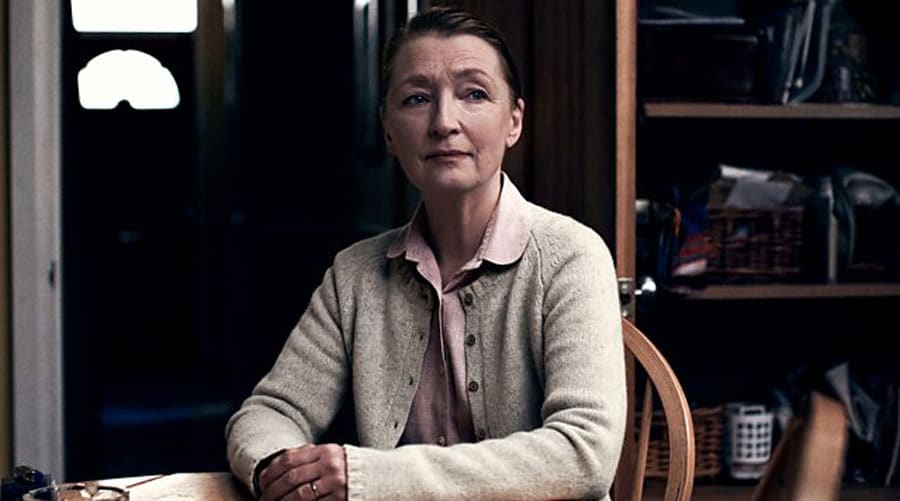
After a quick change of the set – the sink and kettle are removed, and an array of chairs added – we are graced with another one of Alan Bennett’s monologues, and this time it is Bed Among the Lentils. This piece is legendary within Bennett’s repertoire, known for previously having been performed by Dame Maggie Smith in 1988, on the BBC. However, this time round, the piece is being performed by Lesley Manville… who takes on the challenge and definitely wows the audience!
The Bridge Theatre’s Repertoire of Plays
In Bed Among the Lentils, we meet Susan. She is a vicar’s wife… although even to label her as that is tricky. I got the sense that she doesn’t like to feel owned by her husband, plus she pretty much admits that she doesn’t believe in God. Susan talks about her life – it sounds dull and boring, unadventurous and her life is generally confined to the church.
However, eventually Susan begins to move away from her role as the stereotypical vicar’s wife – she skives from evening prayer, doesn’t care much care for the flower arranging and absolutely despises the clergy full of her husband’s faithful followers. Instead, she begins venturing into Leeds, where during her dalliances, she discovers a small corner shop owned by a young man, whom she refers to as Mr. Ramesh. Soon enough, after every inconvenience and every snide comment from Mrs. Belcher or Mrs. Frobisher, she finally snaps… and her relationship with Mr. Ramesh becomes… intimate. Good for Susan, I say!
Lesley Manville as Susan, in ‘Bed Among the Lentils’
But that is not the whole story…
Throughout the entire piece, you get a glimpse of a wine bottle or hear a clink of something from a carrier bag and during her time with Mr. Ramesh, it is revealed that she is an alcoholic. Not only does Susan battle with her commitment to the church, but also with her commitment to the bottle. Luckily, her guardian angel, Mr. Ramesh convinces her to seek help – which she does. By the end of the piece, we hear of Susan’s AA meetings. Mr. Ramesh has travelled back to India and her husband is taking all the credit for helping his poor alcoholic of a wife. I can’t help but feel sorry for Susan – she is trapped, unhappy and her spark of adventure is over. She is back at where her story started – in an uncomfortable marriage although this time, she is a bit more sober.
Lesley Manville captured Susan extremely well in this performance – she really convinced the audience that Susan was a timid, plain old women who pretty much served no higher purpose other than her husband. At the same time, she also made sure that the comic sections and taboo parts (like sleeping in a store room with Mr. Ramesh…oops), were strong and heart-warming for the audience. Also, Manville moved around the set effortlessly (her monologue featured more costume changes and intervals where the set was altered) and managed to keep the audience intrigued, despite the background action. In particular, I think Manville portrayed Susan’s calm exterior persona very well, but then was able to relinquish her inner rage as well. The sections which featured pure irritation and a sense of entrapment were really strong.
Without a doubt, the monologue/one-character play form is so brilliant here. We get to see two sides to Susan – the one society sees and her actual personality. Bennett captures this inner conflict so well through his language, sequencing of events and the digressions Susan makes. Especially, with this performance, Manville heightens the emotion really well and the audience clearly see this infuriating division of the self.
(This monologue was the second of a double-bill – the first being The Shrine. If you would like to read my piece on The Shrine, performed by Monica Dolan, then you can click here.)
The Shrine was the first of eight Alan Bennett’s monologues to be performed live, at London’s Bridge Theatre. This piece is one of Bennett’s newly written monologues, which was first seen on the BBC during lockdown, along with An Ordinary Woman – however, The Shrine is the only one of the two being performed. The one-character play has been paired with Bed Among the Lentils, and is the first of four double-bills being performed in the Bridge’s socially distanced auditorium. This double-bill is still being performed, for the next week (click here for more information).
The Bridge Theatre’s Repertoire of Plays
Monica Dolan took to the role of Lorna, a recently widowed woman, who is grieving over the loss of her husband, Clifford. After being involved in a motorcycling accident, she visits the spot where he was killed. She becomes highly invested in this place, building her own seat from things she found in the garage and imagining which tree he had hit. She makes sure to preserve this ‘death place’ – making it into a shrine of some sort. After weeks of obsessing with this spot, run-ins with the police and even a motorbiking Reverend passing by, she comes across a woman leaving some flowers. She claims that she knew ‘Cliff’, a high adrenaline junkie, whom she used to share a bacon and egg sandwich with. For Lorna, Clifford had been the everyday husband, who used his motorcycle to go bird watching, and ate the mozzarella, avocado and tomato sandwiches she made for him. She can’t help feeling saddened at not knowing who Cliff really was…
By the end of the piece, Lorna tries to move on, accepting that her husband may not have been all that he seemed to be – that he had this other identity and it was okay. She makes his helmets into hanging baskets for the garden, and leaves the audience feeling sorry for her. The ending, despite being criticised as anti-climactic, I think really sums up the uncertainty of life, the accidents which can involuntarily happen and the mystery of people we meet along the way.
Having moved from screen to stage, I think the live performance of The Shrine comes across as more comic that disastrous and serious in tone – Dolan received some really heart-felt laughter during her performance. Lines such as ‘the sheep… they know me now’ and when responding to whether she wanted counselling, Lorna replies ‘who does that, the RAC?’ were just some of the many stand-out lines of Bennett’s monologue.
I think it definitely felt more comfortable laughing with everybody when the piece is being performed live. Sometimes when a piece is so laden with emotion, you don’t always know when it’s appropriate to laugh – being with others definitely normalised the situation a bit more. Also, arguably, this production was a lot less dark than the BBC production, and I think this highlights that grief can come in many ways and trigger different reactions – even comic ones! At one point, Lorna dresses in a bright, orange hi vis, beside the shrine and kneels with the hope people will notice the space. Lorna’s way of connecting and understanding Clifford’s death is not appreciated by others, but I think the comic value can almost bring us back to see the humanity of Lorna and that her reactions are valid. By the end, perhaps Dolan’s tone is more optimistic than that on screen.
Dolan is excellent in this role – emotional, heart wrenching, and performs the whole things with an excellent Yorkshire accent! She had every audience member enthralled by her performance, even during the intervals of the Talking Heads music (composed by George Fenton) and the typical Bennett tea-making scenes. Dolan hit all the laughs in the right place, whilst still maintaining an extreme amount of emotion and composure. Most significantly, Dolan illustrates that grief is not always the same for everybody and that Lorna’s definitely ‘wasn’t typical’. This performance was a perfect way to kick off the Bennett repertoire at the Bridge, addressing moving and emotional themes like grief and death. Monica Dolan really brought so much emotion and energy into this performance.
Since theatre has become strictly an online event, the likes of the National Theatre and the Royal Shakespeare Company have become some of the front runners of streaming their past performances. However, some smaller (and even some regional) theatres have also joined in! And a few weeks ago, we were given the opportunity to watch the Old Vic’s 2018 performance of Mood Music.
Mood Music was written by Joe Penhall – the writer of Olivier Award Winning Musical, Sunny Afternoon (2014) and stage plays, Blue/Orange (2000), Dumb Show (2004) and Birthday (2012). It starred Ben Chaplin, Seána Kerslake, Pip Carter, Kurt Egyiawan, Neil Stuke and Jemma Redgrave. As someone who wanted to see the play back in 2018 (but was in the middle of A Level exams), I was very excited that we were being graced with this performance! Also, as someone interested in contemporary performance and the character of a psychologist or therapist in theatre, I knew that this was a must-see piece!
In the play, we are introduced to two figures of the music industry, Bernard (Ben Chaplin), a music producer and Cat (Seána Kerslake), a young and promising musician. They are in the midst of a legal battle over who owns a song. We hear both sides of the story, as they discuss the situation with their therapists (Pip Carter and Jemma Redgrave) and we also see the constant debate between their lawyers (Neil Stuke and Kurt Egyiawan). The inner demons of the characters are drawn out by their therapists, who delve into Bernard and Cat’s relationships, mental states and family situations. Whilst their lawyers offer a new level of severity to the situation and present how toxic working relationships and legal battles are frequently happening within the industry.
The main characters are really interesting, mostly because we see the good and bad parts of them. Firstly, Bernard, who is quite egotistical in his role as producer. For the audience, particularly at the start, I think he comes across as quite manipulative, especially with his relationship with Cat. However, as the play goes on, we see he is more complex than first expected, especially due to his relationship with his ex-wife. He also frequently uses humour to cover how uncomfortable he is when talking about his feelings. Fortunately, his therapist, Ramsay, eventually manages to help him open up.
Secondly, the character of Cat. She is young, aspiring and extremely creative. She often questions her position both as an artist in the music industry, and as a young woman. She talks about her experiences of being controlled and manipulated when on tour, and I think that she is extremely brave to confront an unequal and powerful industry. Her therapist, Vanessa, perhaps is the most understanding, as a woman herself, and helps the audience to sympathise with Cat’s awkward position.
The conversations between musician and therapist, musician and lawyer, and then musician and musician, all happen at the same time – all of the action has been intertwined, and their situations and individual ideas are overlapped onto one another. I think that Joe Penhall writes this really well, and somehow despite the constant moving of action and the changing of narrative and perspective, it still remains pretty easy to follow for the audience.
An example of the staging – when the characters are ‘cross-talking’ in Mood Music.
For me, one of the stand-out parts of Mood Music was the unique staging. As mentioned, there was constant moving about of the characters and seating, and I think that this chaos and complexity almost reflected the drama and severity of the situation. Notably, a very interesting section of the performance was when the two musicians and two therapists were all sat in a square (see my diagram above). There were two separate conversations happening between patient and therapist (on the diagonal), but the subject matter frequently overlapped, which I though was really interesting.
The conversations involved the other character and were paralleled in subject matter. I think this set-up really helped to see that the action and plot is shared between these two main figures, and that Bernard and Cat were a lot more similar than they think – in their stubbornness and creativity. The director, Roger Michel did a great job in making sure the action was easily understandable and to make sure the focus was on Bernard and Cat, who were positioned at the very front of the stage. For me, it helped to see that the drama was central to these characters.
Also, at the back of the stage, there were four chairs, and if the action didn’t involve either therapist or lawyer, then they would sit at the back of the stage – almost to make sure the audience knew that they should focus on the main characters and their interaction. By the end of the play, the therapists and lawyers all finish the piece by playing instruments, as a way to bring calm the the conclusion. The motif as music as a restorative and reflective medium is definitely shown throughout.
I would definitely recommend Mood Music, as it really explores the strains of the music industry and the impact mentally, personally and professionally, very effectively. It had a stellar cast, who illustrated all of these complexities very well and who had me hooked for the entire duration.
It has been over a month since my last blog post, and I have finally finished my second year of university. I have had a well-deserved rest, consumed book after book, and given ‘Oh! You Little Things’ a much-needed makeover.
So… let the blogging and rants commence, once again…
In today’s blog, I thought that I would go through what I have been reading, over the last few weeks. The good, the bad and the frightening…
The MaddAddam Trilogy- Margaret Atwood
Up first is the MaddAddam Trilogy by Margaret Atwood. This series consists of three novels: Oryx and Crake, The Year of the Flood and MaddAddam. I read the first novel, Oryx and Crake during the spring, and wrote a blog post on how scary it was to read this kind of dystopian fiction in the midst of a pandemic. (If you fancy reading it then click here). The themes of illness and contamination definitely hit a little close to home! I also decided to use this book for my end of year coursework (and how it could be compared to romance fiction… risky, I know!), and after writing the essay, I decided I wanted to see how the rest of the story panned out.
In this series, the world is terrifying! For me, in dystopian fiction, it is essential that you can see the parallels between the fictionalised world and your own world. And Atwood definitely makes sure of this! – from the family situations, to how people are educated. I think that this is one of the main reasons why Atwood’s writing is so gripping and the fact the reader can see a definite connection between fictional and factual, is what makes the whole tone of the series a lot darker.
Also, Atwood really critiques contemporary culture very well. Aspects like body modification, the exposure to graphic content on the internet, and the power of a masculine hierarchy on all of humanity.
I am halfway through MaddAddam, and even at the last novel, it continues to hook the reader, especially with the intricacies of the characters. For anyone who loves to get to know the backgrounds and adventures of a novel’s characters, this is such a brilliant series. The characters’ lives are weaved throughout the three books, and eventually, they all come together really well.
I have often blogged about Atwood’s Handmaid’s series, and how renowned the texts are. I think that despite this series not having as much acclaim, it tackles similar issues like the environment, disease and gender, just as well.
If you are a fan of Atwood, then make sure you don’t ignore this series.
Ghost Wall – Sarah Moss
In between reading The Year of the Flood and MaddAddam, I decided to squeeze in a smaller novel called Ghost Wall. I was given this book by Granta, an independent publisher in London, known for printing new writing and their infamous Granta Magazine. In my publishing module, we met with industry professionals that spoke to us about design, marketing and editing… and they gave us free books! This book was published in 2018 and the following year, it was longlisted for the Women Prize for Fiction, in 2019.
This book was a lot darker than I thought it would be. The action revolves around a small family, some students and a university professor, who are all camping out in a forest, trying to re-enact living in the Iron Age. They wear uncomfortable moccasins and itchy fabrics, must forage for their evening meal and are forced to behave in a very backwards manner.
Sarah Moss writes about a time and place that I had never really considered before, and illustrates both the past and present colliding very well. At first, I struggled to get through this short novel, because it isn’t something I would necessarily read, but once I got into the action and saw the darkness of the piece, it definitely made me want to finish it. The ending was really amazing, so I’m glad I pushed through reading it and that I got to hear a voice that I hadn’t come across before!
For me, it was really important to try and read something different, whilst also supporting smaller publishing house like Granta.
To see more about Granta and the kind of writing they publish, check out: https://granta.com/
A Chip in the Sugar – Alan Bennett
I have also been listening and reading a whole load of monologues – mostly as research for my dissertation, but also because they are becoming the most popular form of dramatic performance, and the best way for expression when in isolation.
After researching writers of monologues, I came across Alan Bennett. The first monologue I read/watched was ‘A Chip in the Sugar’, a part of Bennett’s Talking Heads collection. This piece is infamous for having been performed by Bennett himself – I managed to find a video of his performance, and listened to it whilst reading the book. Currently, there is a series airing of Bennett’s Talking Heads on the BBC. They have been re-filmed, by well-known actors, during the pandemic and filmed socially distanced, on the Eastenders set.
They can also be found on BBC iPlayer (here), if you are interested.
All of Bennett’s pieces have such a range – from being dark to humorous, to devastating in subject matter and the majority all root from his own experience. I think that ‘A Chip in the Sugar’ looks really well at generational conflict and how attitudes, that are prejudicial, are beginning to change, especially at the time in which it was written.
I think ‘A Chip in the Sugar’ is just an iconic insight to Bennett’s world, his witty sense of humour and his left-winged politics, just to name a few – which I have really enjoyed exploring! The relationship between the narrator, a middle-aged man, and his mother, is rather absurd to a contemporary audience (or definitely someone my age!), so it was interesting to see something so outrageous be presented. I thought that the exploration of generations was really comical as well, especially with the use of a monologue as we only get one side of the story – for example, when stereotypical, prejudicial and conservative remarks are made by the Mother, you can almost feel the annoyance of the narrator radiate from the page!
Bennett’s writing really allows the reader to reflect and listen to the experiences of the narrator. The personal essence is the metaphorical ‘cherry-on-top-of-the-cake’ and definitely helps illustrate his views and opinions a lot more clearer – helped by the Northern dialect and Yorkshire accent as well (something that is usually missed in popular literature)!
Make sure to check out the newer performances on the BBC, they really society well! The 12 episode series also features two new pieces of writing (written last year by Bennett) being performed.
It cannot be denied that Margaret Atwood is infamous for her speculative and dystopian fiction – most commonly for her masterpiece, The Handmaid’s Tale and its recent follow-up, The Testaments. Her imagination is fierce – her prose somehow hook you despite the disturbing themes and fearful future that is proposed (see my previous blog here, for more on this subject). But very recently, I have read her novel Oryx & Crake, which is a part of the MaddAddam trilogy. It shocks, it questions, it compels you to keep reading…
Oryx & Crake, begins with the character, Snowman – a man alone in a destroyed world, who wears a filthy bed sheet and whose only company are The Crakers and the voices inside his head. As the novel continues, we discover who Snowman is, his background, his schooling, his relationships with friends, family and lovers, and most importantly how the world came to be the way it is…
But what is so disturbing about it, is reading it into today’s environment. Here are some themes, and why it was a terrifying read in today’s social, political and environmental climate:
Disease
Oryx & Crake is all about trying to improve what we already have – whether this is our appearance, enhancing bodies, and even creating strange, hybrid creatures – all of which seem completely useless to me. Despite this attempt to immortalise humanity and inscribe perfection onto the world, society is struck with illness which has deliberately been engineered by the antagonist.
I couldn’t help but think that this idea of illness overcoming the population is highly significant today. Knowing about the coronavirus and how it is overwhelming the world, suddenly made this read very real – dystopian stories must be recognisable, as well as being shocking and absurd, but the ‘recognisable’ in this arguably hits very close to home.
Contamination
Images of cross-contamination make this story extremely noticeable. From the chaos of the news, the fleeing of people from large cities, to the rapid rate of infection. This most disturbing image was of Snowman rummaging in the house of a family which had been killed by the disease – looking for food and a new bed sheet to wear. Snowman questions the morality of his selfish behaviour and whether he should take a dead man’s clothes.
Again, remnants of pandemic, infection and social fear are conjured up by Atwood – terrifying and very prominent today.
These next two topics may not be as significant in today’s climate – yet due to what I have observed in the last few months, for me it still is of major importance. Obviously, Atwood is aware of these themes cropping up – and I really do think it is something important to highlight within this piece of fiction.
Educational Institutions
Snowman, in his previous life (when he went by the name, Jimmy) went to the Martha Graham Academy for his version of higher education. This school is for the humanities and arts, which in Atwood’s world and arguably ours, is looked down upon – being considered useless and second to science.
Unlike Jimmy, his best friend, Crake, is a high achiever and goes to the top school, the Watson-Crick Institute, designed for the sciences. Students at this institute are immediately positioned on top of the hierarchy. This next generation of scientists are glorified for making hybrid animals, false identities and their snobbish behaviour. Even Crake sees Jimmy as inferior – perhaps society has conditioned him to think this way?
This ranking system and opinion of arts being of lesser importance, definitely echoes today’s society – people like to think that this isn’t the case today but the academic ranking and white privilege within the British educational system is still shocking. There are universities (Oxford and Cambridge spring to mind) which battle for academic reputation and prestige – they are labelled as top-dogs – whilst smaller universities receive no acclaim. Smaller and non-Russell group universities explore similar topics, are diverse, and are flooded with gifted innovators, creatives and critics. After my visit to the University of Oxford, and being put down and judged for what university I attend and what course I study, I definitely knew that a smaller, diversified and overall happier learning environment was so much better.
And as for the arts and writing being seen as less important, well that’s another blog post entirely…
Sexualisation and Pornification of Children
This is a major theme within the novel and it is how we come across the title character, Oryx…
Atwood illustrates this obsessive and almost emotionless relationship to porn – she highlights the absolute ridiculous access young people have, thanks to the internet and the graphic material it contains. Snowman and Crake, when they are younger, spend their time watching dark material and reacting as if it is normal, comical perhaps. She definitely highlights how society is acclimatised to this exposure. The characters see all kinds of material, including sexual engagements with children… and here we meet Oryx – a character who, from a young age, is manipulated and abused by adults. It leads to her not knowing anything other than sex – she defends her abusers and struggles to see the faults in this exposure.
I recently read ‘The B*easts’ by Monica Dolan ( see my review here) which explores what it is like for a child, after they have been exposed to sexual behaviour and pornification of media, from a young age – and it really resonated well with this piece.
Overall, I thought this was a standout piece – it’s scary nature and strangely current issues is what got me hooked reading it. Atwood should definitely be recognised for this trilogy, as much as The Handmaids Tale – it is just as brilliant and I would definitely recommend.
Theatre has always been a source of innovation. It makes us laugh. It makes us think. And now, it makes us want to get up and dance. The West End production of SIX is definitely a musical which does all three.
SIX explores the wives of Henry VIII and their individual stories (which are usually ignored) – the heartbreaks, the falling in love and, of course the beheadings. Each Queen performs their own song, competing for top-spot as lead singer in their band, and naturally, this is based on who had the worst life…
SIX the Musical
The wives hardly ever get discussed – they are labelled as ‘divorced, beheaded, died, divorced, beheaded, survived’, whether that is in the history books or in schools and uniquely, we get to hear their own stories, whilst having a well-needed lesson on (what the Queens like to call) ‘her-story’.
The Cast of SIX
But what do we exactly learn from each Queen? Here are some facts you may not have known before…
Catherine of Aragon
Aragon had to put up with Henry for the longest. They were married for almost 24 years, after first coming to England at a young age and not knowing any English at all… must have been awkward. She went through heartbreak again and again – her betrothed dying and being lumped with his brother (which is just the start.) She suffered several miscarriages, and was mother to Mary – who much to the chagrin of Henry, wasn’t a male heir. The show highlights her devotion to the Catholic faith and eventual fight against the divorce Henry proposes to her. A definite Queen with power, sophistication and easily gains respect from the audience.
Anne Boleyn
The rebel of the bunch, who constantly cracks jokes and likes to remind the others of her beheading. She was Henry’s mistress whilst he was married to Aragon – he even moved her into the palace at one point. I think it’s safe to say that both her and Henry shared a mutual passion for having affairs… which lead to her eventual demise. She was the mother of Elizabeth, but like Aragon, Henry doesn’t care for his daughter and mother of his child – especially when he decides to chop off her head.
Jane Seymour
Jane Seymour… ‘the only one he truly loved’ apparently, wasn’t around long enough to have a destructive relationship. She died way too early. And of course, Henry loved her because she had baby Edward. It may seem all dandy for Jane, but she has the most moving storyline within the show – she sings about her heartbreak and having to have a ‘heart of stone’ around Henry. Jane Seymour’s short life and inability to raise her son, definitely leaves the audience sympathising with her, most of all.
Anna of Cleves
Anna of Cleves, the loudest, the most independent, and the most fun of them all. Instead of marrying her sister, Henry married this Cleves sister. Having seen her portrait, crafted by the renowned painter, Hans Holbein, Henry decided she would be wife number four… until he actually saw her in real life. Her supposed ugliness is why they weren’t the perfect match… although for her with the security of a palace and a generous settlement after an annulment, Anna was left pretty well off (not bad compared to his other wives). She lived in London for the rest of her life… without being beheaded… successful, right?
Katherine Howard
Katherine Howard, also known as Queen of the hair flick. From a young age, K Howard is as promiscuous as can be, whether that is with her music teacher, a coachman or the King of England. Because of her promiscuity within marriage, she is beheaded… which is rather ironic given Henry’s constant infidelity. By the end of Howard’s song though, we understand that the only thing she has ever known is how to be a target of male desire, and how she thought that she would be treated better when it came to a relationship with the King of England… sadly, she was very, very wrong.
Catherine Parr
Catherine Parr, the one who survived. Parr had already been through a couple of marriages and was made to give up her true love for the King of England – looking after him and his family in the process. Perhaps, the most uplifting of the Queens, she doesn’t want to be tied down to King Henry VIII, she wants a kind of independence and be free from the umbrella term of being a wife… rather rebellious given Tudor expectations.
The Queens during the ‘MegaSIX’. Queens: (Centre: Catherine Parr, Left to Right: Jane Seymour, Anna of Cleves, Catherine of Aragon, Katherine Howard, Anne Boleyn)
What I enjoyed most about this musical was the message of female empowerment – all these women who have been through horror, rise from the ashes and come together to make a change. The writers, Toby Marlow and Lucy Moss have written something which highlights the importance of exploring women in history and women being independent from men and patriarchal structures. The music, provided by the ‘Ladies in Waiting’, the dancing, the lighting, and staging give you such a unique experience. The show is an intimate affair alone, based at the Arts Theatre near Leicester Square tube station – a small venue, but it allows you to see everything that is going on. The audience and performers definitely appreciate this intimacy – at the end of the show, the Queens perform the ‘MegaSIX’, allowing the audience to film and take pictures of the song which again brings everyone together for one final uplifting moment.
Since the inauguration of SIX at the Edinburgh Fringe in 2017, the musical has traveled all over the world. Including, a UK tour, an Australian tour, a tour on the Norwegian Bliss cruise, and very recently has made its debut on Broadway. This musical speaks to everybody and the surging popularity means it can spread a universal message of empowerment worldwide.
For more information about tickets, the birth of this musical, please visit the SIX website, here.
The B*easts by Monica Dolan, is a play which explores the sexualisation and pornification of culture – especially, the influence it has on children. These shocking themes are discussed by psychologist, Tessa, who discusses an ongoing case and report she must write. The one-woman show which was both written and performed by Dolan, won The Stage Edinburgh Award in 2017 (at the Edinburgh Fringe Festival), and after a run at the Bush Theatre, in London, was nominated for an Olivier Award in 2018.
The play is written as a monologue, with the intimacy being heightened by a single actor on stage speaking explicitly to the audience. Dolan uncovers aspects of society, which at a first glance are the norm, or are commonalities, however, in fact they alienate and influence children at lot more than we anticipate – The B*easts explores the influence of media, magazines with objectifying images of half-naked women, the impact of technology and social media, as well as the lack of legal barriers when it comes to surgical or aesthetic advancement. This piece makes you reevaluate the materials in society which can have a significant impact on the human psyche.
What I enjoyed about The B*easts was how it brought light to something very contemporary. I think the themes of play are ideas that the reader or audience can easily recognise, thus making it more personal and severe in its message – particularly, the idea that within social and familial environments, there is still an abundance of sexualisation and objectification (especially of women) and children are unwillingly exposed to this. The B*easts definitely has the power to make you question the origins and consequences of an over-sexualised environment for both you and children.
Fortunately, this is not a real story – instead, Dolan captures the brooding reality of how this exposure impacts in radical ways – whether this is physically or psychologically. It also makes us realise that these issues are so apparent in our society – for example, the play’s image of the idealised image of a woman is very interesting and how this picture is almost mechanically programmed into us through media and magazines.
Despite the dark yet extremely informative themes, there is still room for wit and humour – Tessa must show her humanity somehow! From Tessa’s Cagney and Lacey ringtone to the constant fiddling with her e-cigarette hints at a more personal retelling of events, as well as a non-prejudicial essence to the piece.
When reading The B*easts, I couldn’t help but think that Jung and Freud would have had a field-day with this play – from infantile regression, repression and generational conflict – you name it, this piece was flooded with thrilling psychological ideas and concepts. Thus, the final line of the play, was the icing-on-the-cake into my Jungian inquiry… but you will have to read the play to understand more!
Fingers crossed, this play will emerge in theatres for another run, one day. For me, it was something completely new, and does what any great piece of theatre should do – it makes you think …
But for now (until we are graced with a rerun) you can buy a copy of The B*easts here.
They’re finally back! After a short hiatus, and a few solo shows thrown in for good measure, Fascinating Aïda finally returned in their brand new show at Queen Elizabeth Hall, last month. Gracing us with old and new songs, whilst painting a picture of positivity for the audience at the Southbank Centre (particularly in this abysmal political climate). This show is just the beginning – in the Spring, F.A will be voyaging once again, up and down the UK, on tour, showcasing their musical uniqueness.
Fascinating Aïda are also joined by Michael Roulston, who provides piano excellence, comedic commentaries, and I must say, a rather superb introduction to the Bulgarian Song Cycle.
We heard all kinds of songs – from the popular tunes to the political ones to the love ballads. I for one, was thrilled to hear their back-catalogue number, ‘Is it me, or is it hot in here?’ return to the set – because everybody should listen to a song about the menopause, at least once in their life! Not only were their songs about fake news and Instagram, but old numbers were rewritten especially for this occasion, to fit these polemical times. I saw their second performance of the schedule (10th December), and I only wish I could have been there to see what new Bulgarian Songs were conjured on the day of the General Election result…
But, for me, the most moving part of the performance was the rendition of ‘Goodbye Old Friends’ – pure and emotional and a song which illustrates the good and the bad of friendships. Dillie, Adele and Liza stand close around the piano and the beauty and heartache, without a doubt, resonates around the entire theatre.
Trust me… If you want to hear songs of the state of Britain, funerals and this strange obsession with posting your life online, then don your best theatre dress, treat yourself to a glass or two and make sure you see F.A on their upcoming tour. They are also in London until Sunday 5th January… so make sure you grab some tickets!
Details can be found (here) on the Fascinating Aïda website.




 Oh! You Little Things