Exploring the hidden gems of theatre and literature…
Author: ohyoulittlethings
Welcome to my blog! I am an English Literature graduate who is way too invested in theatre and dramaturgy. This blog will pretty much just feature theatre reviews and posts about Virginia Woolf! Enjoy and definitely make sure you read with caution...
This play was first performed on 6th May 1964at the New Arts Theatre, London.
Entertaining Mr Sloane is a classic Ortonesque comedy, full of puns, double entendre, and sexual references… what’s not to love! Having already seen and read What the Butler Saw at the Leicester Curve way back in 2017, I knew Entertaining Mr Sloane would be full of the same comedy… but this time, Orton features themes which are a lot darker – death, murder, trauma, grief – and creates a new kind of comedy entirely!
Pictured: 2009 Production of Entertaining Mr Sloane at the Trafalgar Studios, London (cast including Imelda Staunton, Matthew Horne, Simon Paisley Day & Richard Bremmer) | Source: https://ett.org.uk/our-work/entertaining-mr-sloane/
The play begins with the mysterious entrance of Mr Sloane, a seemingly ordinary, young man looking for a room. Kath, a woman who seems to be a bit unstable (caused by the trauma of having to give up her baby, I’d guess), offers him a room. She is immediately attracted to Sloane, whilst her blind father, Kemp, is unsure – thinking that he is the man who murdered his previous employer! Kemp lashes out at Sloane, injuring him in a comical scene.
Helping with his recovery, Kath invites him to stay and her brother, Ed gives Sloane a job. Kath becomes Sloane’s ‘mamma’… but strangely, also, has sexual relations with him! But then, this is a Joe Orton play, and it wouldn’t be a Joe Orton play without some character getting it on with a quasi-family relation or someone borderline inappropriate – there is definitely some kind of incest meets trauma meets Oedipus thing going on. Not only is the strange mother/son/lover relationship complex, but there are also homoerotic undertones within Sloane and Ed’s relationship – seemingly subtle (ish), but they are very much there, it is likely these are faint due to the legality of homosexuality back when Orton first wrote the play.
Not long after Sloane first arrives, Kath falls pregnant… damn! She wants to marry Sloane, ensuring her child has a proper upbringing… because pseudo-adopting a grown-man and calling yourself his ‘mamma’ is definitely the ‘proper’ thing! Sloane, on the other hand, does not want to marry her. Meanwhile, Kemp, has told Ed that Sloane has been hitting him… nobody seems to really be bothered about this which is pretty bizarre, I think Kath and Ed are just completely enamoured with Sloane, and too caught up with him and his youth!
And wait, it gets even more dramatic, Sloane confronts Kemp (about telling Ed)… ranting and raving and all that, and of course, it ends up with him killing Kemp! Yep, we have a murder/crime element to bring to the piece. In Sloane’s rage, we also learn that he was in fact the person who killed Kemp’s old boss. Wow, we love a full-circle moment in Orton’s work!
In the final act, the three remaining characters decide what to do now Kemp is dead. Ed suggests he and Sloane go away, much to the chagrin of Kath – she says if they do this and Sloane doesn’t marry her, then she will tell the police. In the end, they decide that Sloane will marry Kath (that way as a spouse, she cannot give evidence in court against him – very clever) and not tell the police, and also on the condition that Ed can share Sloane with her. It is very much a love triangle moment… and a Orton comedy that will leave you somewhere strange… in a place between laughing and being strangely concerned.
Ironmistress is a play set in Victorian Britain – yes, the time where the Angel in the House was at its peak! Martha Darby is a widow and has inherited her late husband’s ironworks. She struggles to be accepted by society as sole proprietor and Martha begins to look towards going against these models of Victorian patriarchy and industry and gaining a new sense of power.
Meanwhile, her daughter, Little Cog (and yes, Little Cog as in a small piece of a large system – extremely fitting, if you ask me!) is due to be married the next day – a child-like character who constantly questions her mother about men and what marriage is really like, yet Martha isn’t too open. To celebrate her ‘last day’ – which definitely makes her demise sound more like death (but then again, death and marriage are arguably VERY comparable!) – Little Cog and Martha play games and tell stories. These stories move from tales about rebellion and to returning to stories and echoes of biblical teachings about the traditional, maternal, and powerless figure of a woman.
She is not unhappy.
She’s his wife.
She’s just being sensible.
Martha, Ironmistress
Intertwined in this extremely poetic play, Little Cog frequently inhibits the fantasy character of Shanny Pinns, a woman who refused to marry and went on to become a highwaywoman-kind-of-figure. It seems that some part of Little Cog (and somewhat Martha) wants to be this figure. Little Cog is already intuitive and ask questions, and throughout the piece, she keeps returning to Shanny Pinns – a fantasy role which finally allows her to rebel, blaspheme and go against all the Christian teaching that structure the Darby household. I think Little Cog secretly idealised her – she may not know it, it may be hidden deep within her subconscious and she doesn’t want to tell her mother, but there is definitely something interesting about this reoccurring, feminist alter ego.
Little Cog’s naivety stands out almost uncomfortably in this play – perhaps linking to just how uneducated and unaware of society women actually were during the Victorian Era. She acts like a child yet is old enough to marry. She has no awareness about what marriage entails and her recalling of her wedding night is uncomfortable for the audience, and in today’s world would definitely be a consent issue! I kept wondering why Martha didn’t inform her better. Perhaps, that was just the norm of society? Maybe Martha doesn’t want Little Cog to understand the pain and comfortability of the real world and her lack of knowledge helps her live as painlessly as possible.
One day, thinking this, she looked down.
There at her feet was a wing.
She took it apart.
Cleaned the bones
And fitted it back together
Like a jigsaw.
She forgot about the soldier and his iron things.
She held up the wing to the sun
To see the cleverness in it.
And she said to herself
One day I’d like to build a metal bird machine
That flies in the sky
And gives people lifts in it.
Lights down
Little Cog exits.
Little Cog/Shanny Pinns, Ironmistress
This was the first April De Angelis play that I had read, and after listening to her on the Royal Court Podcast, I knew that Ironmistress would include a strong Feminist voice – and damn, it did not disappoint! This piece explores of the internal and external conflict of whether to break from social norms, and if this is safe or viable in terms of economics and the ability to survive. De Angelis is renowned for her feminist dramaturgy, and I can definitely see the influences of Caryl Churchill and protofeminism in her work. She is also known for capturing historical pasts and adaptations, and De Angelis really captures the bleakness of Victorian through the play’s unique verse and historical references to ‘fallen’ women.
After a very loooong break from this blog, I thought that it may be good to revitalise my series of ‘Thespian Thoughts’, get back into writing before my next degree, and finally start adding all of the theatre reviews that I have written over past six months or so.
There will be reviews from plays I have watched or read… the posts will just be small pieces gathering my thoughts, giving brief overviews, some stand out quotes, and my sharing overall opinions….
I currently find myself making my way through the copious amount of books on theatre that sit beside my bed. Beginning with Peter Szondi’s Theory of the Modern Drama, translated by Michael Hays – which is a book pivotal to the understanding of how theatre and Drama (and yes, capital ‘D’) has changed since the days of the Renaissance.
The development of a self-conscious being, after the medieval world slowly faded away, led to the need of a different kind of figure presented on the stage – a figure who mirrored interpersonal relationships. The Renaissance saw the movement away from the classical unities of action, time and place, which Aristotle and the Greeks came to love – and the removal of the likes of the chorus, the prologue and epilogue, led to dramatists using dialogue as a ‘sole constitutive element in the dramatic web’.
I didn’t want to make this a long blog talking about modern theatre (blah, blah, blah), but to share a really interesting quote of Peter Szondi about the theatregoer (although maybe I should credit the translator for capturing Szondi’s thoughts really well!). I think he really begins to capture how the spectator has a role to watch, learn, and think about what is being performed in front of us – and I definitely see the resonances with Brecht here! But I think above all, it shows the importance of voicing ideas about the world and hitting the audience with a strong punch of what really is going on around us.
‘The theatregoer is an observer – silent, with hands tied, lamed by the impact of this world’
Sarah Kane’s 4.48 Psychosis is not an easy play to read, to watch or even to think about, most notably because it has been described as Kane’s ‘suicide note’. This play was fist performed at the Royal Court, Jerwood Theatre in 2000, however by the time of its first performance, Kane had sadly committed suicide. Since it’s first performance, many adaptations have taken place around the world and despite its uncomfortable themes, it still remains one of Sarah Kane’s most popular pieces of writing. It may be a difficult play to tackle, but what it does give you is a window into the life of someone in distress and pain, perhaps showing the audience an image that they have never come across before. In the case of 4.48 Psychosis, it really begins to show us how theatre and performance can be used to make society aware of the difficulties in which people are actually living through – and Kane does this through shock-factor, allowing an audience to hear dark thoughts and talking about themes which (even within in-yer-face theatre) can be uncomfortable for a spectator. Kane’s work finally begins to show that illness is not just about what you can see on the outside, but that it is deep, complex and often invisible to others.
Sarah Kane
What is immensely unique about this play is that it has no set characters or (linear or clear) plot we may argue. In Kane’s first production, three actors are onstage and take turns in performing this strange sequence of pain and confusion. From looking at many productions of this play, it is not always completely clear if this stream of dialogue is centred around one character (or patient), or if this movement between actors represents multiple patients describing what trauma they are going through. However, when first looking at this play, I saw myself interpreting this collection of voices as a single character – a single character showing just how expansive and chaotic mental illness can be and that it triggers multiple responses. These different voices explore themes and issues of trust, body dysmorphia, relationships, as well as connections to faith. No matter what Kane’s intention was regarding the number of characters, I think the most interesting idea is how this multitude of voices all work together to illustrate an overwhelming result and display of emotion.
If you look at 4.48 Psychosis on a page, it doesn’t make much sense. It is an amalgamation of single words, whole sentences, uncertainty, long and drawn-out pauses and to piece it together can be difficult – especially if we tackle it from a traditional or Aristotelian perspective. But I suppose that is what makes Kane such as genius – it is not just the language and the acting which offers the audience a window into the subject matter, it is the structure and composition of the writing which also communicate these ideas. In order to describe the upmost panic and disjointed feelings, which Kane herself was going through, she creates theatre which is illustrative of all her problems and makes use of every dramatic element to describe these harrowing feelings. This is the kind of theatre that performers, dramaturgs and theatre practitioners would have a field day with! Through Kane’s writing – the form, genre and stylistic decisions – she really illustrates the complexities of the inner mind.
This piece made me reflect on the one-character play – a dramatic form which was the centre of my undergraduate research and dissertation. In my thesis, I argued that the one-character form is perhaps one of the most effective ways for a playwright to capture the mind of a character and also as a form which frequently unveils aspects of culture which are hidden, considered taboo or privatised by society. This dramatic form offers a relationship between performer and spectator which many other forms can’t necessarily establish as effectively, such as an ensemble piece which doesn’t allow this concentrated relationship or direct communication.
In my research, I explored how as a consequent of this audience-performer connection, there was an opening for discussions on topics such as the sexualisation of culture, the representation of the body within society and (an idea we can compare with 4.48 Psychosis) the ability to have a closer investigation into the state of the mind. For example, in the iconic one-character play, Krapp’s Last Tape by Samuel Beckett, the audience bear witness to Krapp’s private behaviours, actions, movements and thoughts (which arguably happen through the tapes as well as his gesticulations). Beckett stages a personal moment belonging to Krapp and through this concentrated glimpse into his life, the audience can observe things like Krapp’s attitude towards sexual desire, his past regrets, and processes of thinking and reflection. This dramatic form gives the privatised a platform – themes and ideas which usually are repressed or ignored – and it seems that Kane also begins to do the same thing.
Although not explicitly a one-character play, 4.48 Psychosis can definitely be compared to this form – especially as it seems like all the actors make up a single entity of suffering. In some productions, there is direct communication (a breaking of the fourth wall potentially) with the audience and similar relationship between audience and actor – as seen with the one-character play – can be generated. These figures provide different snapshots into the reality of mental illness, depression and suicidal thoughts. By having a similar ability to observe these privatised thoughts, it becomes clear than these themes are something which should be discussed more – and unquestionably how they should be treated with upmost seriousness, very much unlike how the doctor figures appear to approach them in the play.
Perhaps, in fact, Kane’s innovative form of theatre – most notably, the number of voices and no clear structure – actually captures the processes of the mind and consciousness in a more realistic way. The mind is not linear and controllable (like we see in the memories of Krapp and his pausing of the tapes) but ridiculously hard to illustrate and most importantly, contain within an art work. Kane lets these thoughts be free, allows them to move around the actors and transform through different forms and styles of language, and maybe this dramaturgical decision can illustrate chaos a lot more efficiently than the one-character play.
In terms of theatre and the depiction of the mind, it also seems like Kane’s play can reflect literary elements of the stream of consciousness to capture this vastness – the streams of words (not necessarily making much sense to the audience upon viewing) can really show the constant workings of the mind when under immense pressure.
‘flash flicker slash burn wring press dab slash
flash flicker punch burn float flicker dab flicker
punch flicker flash burn dab press wring press
punch flicker float burn flash flicker burn’
Likewise, we could even compare sections like this (see above) to new dramaturgical practices, such as enumeration – in which lists and streams of data are presented to a spectator. Due to the vast amount of language, connections made between this information and unification of this data, there is this accumulation of overwhelming emotions and feelings generated from the audience. In 4.48 Psychosis, we see Kane’s constant presentation of sections like this – and they seem the show this extremity of chaos. When faced with this huge listing of words, connoting pain and distress, it is possible that an audience would really be moved by the sheer quantity of it all. From a dramaturgical perspective, it seems that every single word choice, every single phrase and the entire composition of the piece can have intense impact of Kane’s writing.
Sarah Kane has provided such an insight into the world of hidden mental and psychological problems. The fact that this play, as we know, is deeply personal and is overshadowed by one of the greatest tragedies British playwriting has seen, it further shows us the importance of exploring stories and issues around mental health. Kane begins to show just how expansive theatre and dramaturgical practice can be in communicating invisible problems, and this is a play which everyone needs to read in order to understand how powerful theatre craftsmanship can be.
As a way to showcase just how much learning you can do, even though everything is online, I thought I would start to blog about my overall week at university – mentioning some of the interesting things that have happened in my modules and some of the interesting ideas we have covered. I am now a third year student and undertake three physical modules per week, as well as researching my own dissertation topic. And to say I am only actually in online classes twice a week, it seems that we cover a lot of ground…
The Satanic Verses and the Power of Words
To kick off this academic year, we are focusing on literature that is so powerful, it can impact the life of a writer very severely… and who better to start off with than Salman Rushdie and his controversial Satanic Verses. It is a text which follows the lives of Gibreel and Saladin who fall from an aeroplane, after it is taken by hijackers. During this fall, the two men go through a kind of transformation, pretty much becoming an angel and a devil and we see them navigate their new lives after this life-changing alteration. Throughout, Gibreel dreams about the beginnings of Islam and the prophet, Muhammad, as well as about a pilgrimage to Mecca.
Source: The Canadian Jewish News
This book was a tough read, with references I didn’t know about… but was definitely worth it in the end. It makes you pay attention to other cultures, as much as your own and I appreciated how much it pushed boundaries and just how much discussion it generated. The Satanic Verses was seen as blasphemous by some Muslims (not all, which is where many articles and reports get it wrong!), for its depiction of Muhammad (named Mahound in the novel). Rushdie was then issued a fatwa against his life by Ayatollah Ruhollah Khomeini (who was Supreme Leader of Iran), which called for Muslims to kill him. He was made to go into witness protection and many attempts were made on his life. There were also protests, book burning and so many arguments over this text.
Salman Rushdie is a prime example of how what you write can be received by people in so many ways – as I previously mentioned, not all Muslims were in favour of this fatwa and many academics based in Iran criticised the Ayatollah for this decision. I also think it is so incredible how writing and the response of it, can lead to your life being put in danger. The start of this module definitely highlighted how even literature has the power to question politics and the law.
Memoir is INTENSE!
In my next module, we have begun to look at literature which highlights the aftermath of the second world war. We looked at the beginning of The World of Yesterday: Memoirs of a European by Stefan Zweig, which begins by highlighting the different types of culture and international relationships that he has witnessed, starting from his parents’ generation and moving into his own.
Source: Amazon
What shocked me was the contrast between the start and end of the first chapter. At the start, we hear about how Austria thrives – with its economy and its relationship with the arts. Everything seems picturesque and serene. He describes how going to the theatre is such an important act for the public – for people of all classes and all ages – and honestly made me hope that (even though it was highly idealised), one day we may see this within British culture. However, by the end, we hear of the hatred amongst nations and conflict which is brewing within Europe. Zweig describes this contrast so well, and the reader really does feel a pivotal change in this chapter… that we are going to see some of the real horrors and brutality of war later on in the book.
‘The hatred of country for country, of nation for nation, of one table for another, did not yet jump at one daily from the newspaper, it did not divide people from people and nations from nations; not yet had every herd and mass feeling become so disgustingly powerful in public life as today.’
Stefan Zweig – Chapter One
Greek Theatre Masks
My third and final physical module begins with discussing the origins of stage drama. Before completing this weeks’ reading, I didn’t really like reading Greek Theatre – I had read Antigone and Electra before but never quite clicked with it. For this session though, I had read Oedipus Rex (aka Oedipus the King) and Aristotle’s Poetics, and had a huge change of heart towards the Greeks! These texts are such landmark pieces and set out what tragedy is so well…
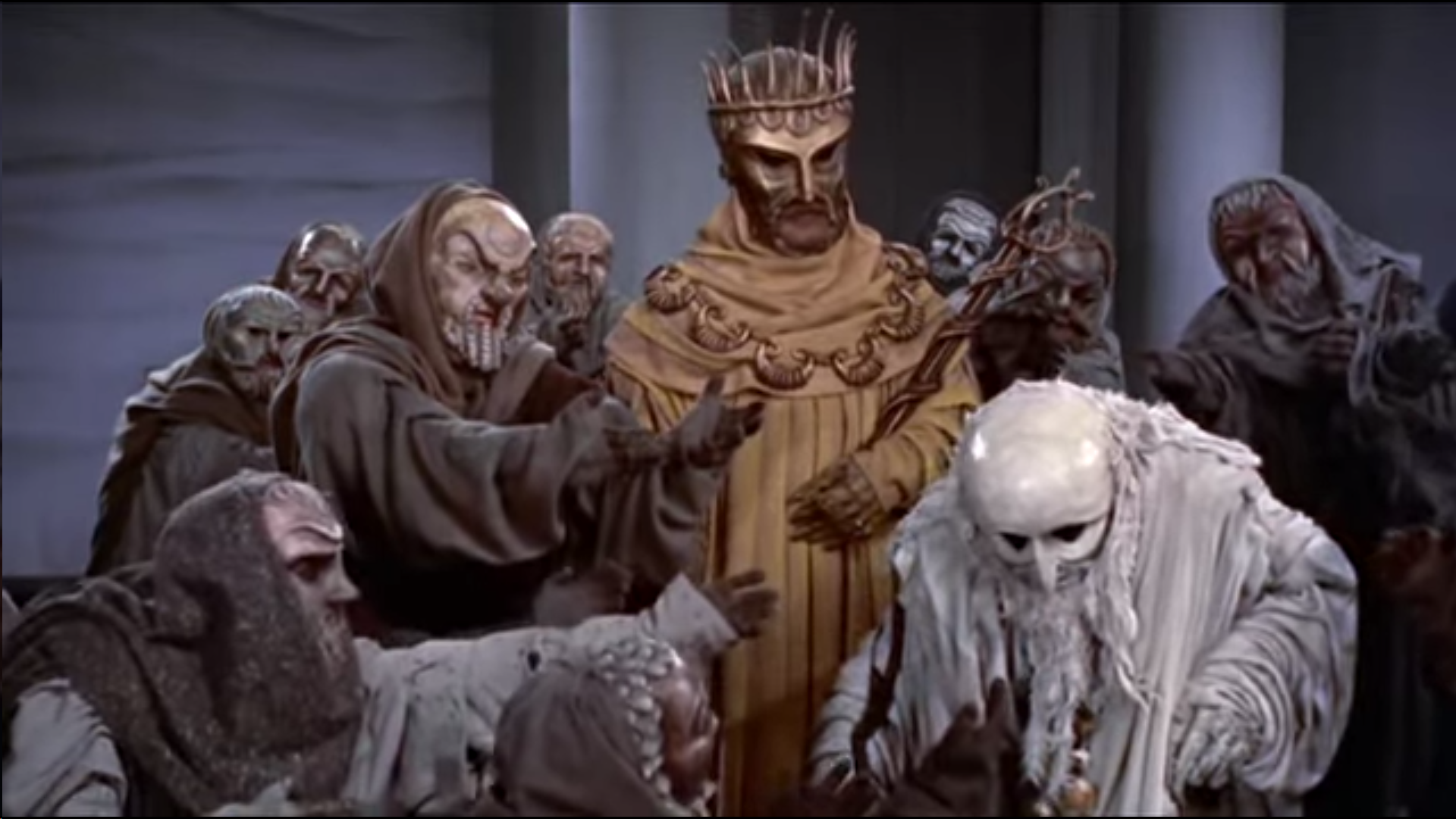
From the film, Oedipus Rex- 1957
We went on to look at theatre masks, and how they were an aid to indicate what genre of play the audience were watching. But also, how through the use of a mask it helped to reveal hidden parts of the character or actor. A mask can help delve into the subconscious and allow a transformation of an actor… I thought that this concept was really interesting to how costume and props can really add a whole other psychological understanding to a piece of theatre and alter a personality entirely (and of course, I pointed out to my friends that it reminded me of drag!).
And to conclude, a quote all about masks by the one and only, Oscar Wilde…
‘Man is least himself when he talks in his own person. Give him a mask, and he will tell you the truth’
Three days ago, it was the hardback publication day of Alan Bennett’s Two Besides: A Pair of Two Monologues – a duo of monologues written last year by Bennett, that were performed as part of the lockdown series on the BBC in June. The collection features An Ordinary Woman and The Shrine (that was also performed at the Bridge Theatre in September – see my review here). I have already seen these both on screen, but wanted a copy of my own… pretty much just to sit beside my battered, second hand copy of Bennett’s first collection of Talking Heads.
The cover of ‘Two Besides: A Pair of Talking Heads’
However, despite having already seen these on screen and on stage and with a big thanks to my ever-procrastinating personality, I decided to reread these pieces… but not before reading the introduction from Nicholas Hytner who was involved with the new collection.
Hytner describes the process of organising a series like this in a short amount of time and whilst still following social distancing measures. He writes about Zoom calls to make up artists and actors, phoning Alan Bennett (who has no laptop and still relies on his infamous typewriter) and the process of acquiring over 50 different costumes through eBay. These are just a few of the problems production had to face!
Reading this introduction is an eye-opener for anyone, and shows how strong and dedicated the arts industry is despite major setbacks (that mostly being the Tories – thanks for that). The whole planning process and the way it was made is honestly incredible – the production team really do deserve some credit.
The inside cover…
The publication of this text is really amazing, but what prompted this blog was Hytner’s last remarks.
As the Artistic Director of the Bridge Theatre, as well as director of a handful of the monologues, he highlights the reality of risks towards the survival of the theatre – something deeply personal and important to everybody involved in Talking Heads, but also to the people reading this book. The theatre and the arts are embedded in the everyday, and we can’t escape the importance of it!
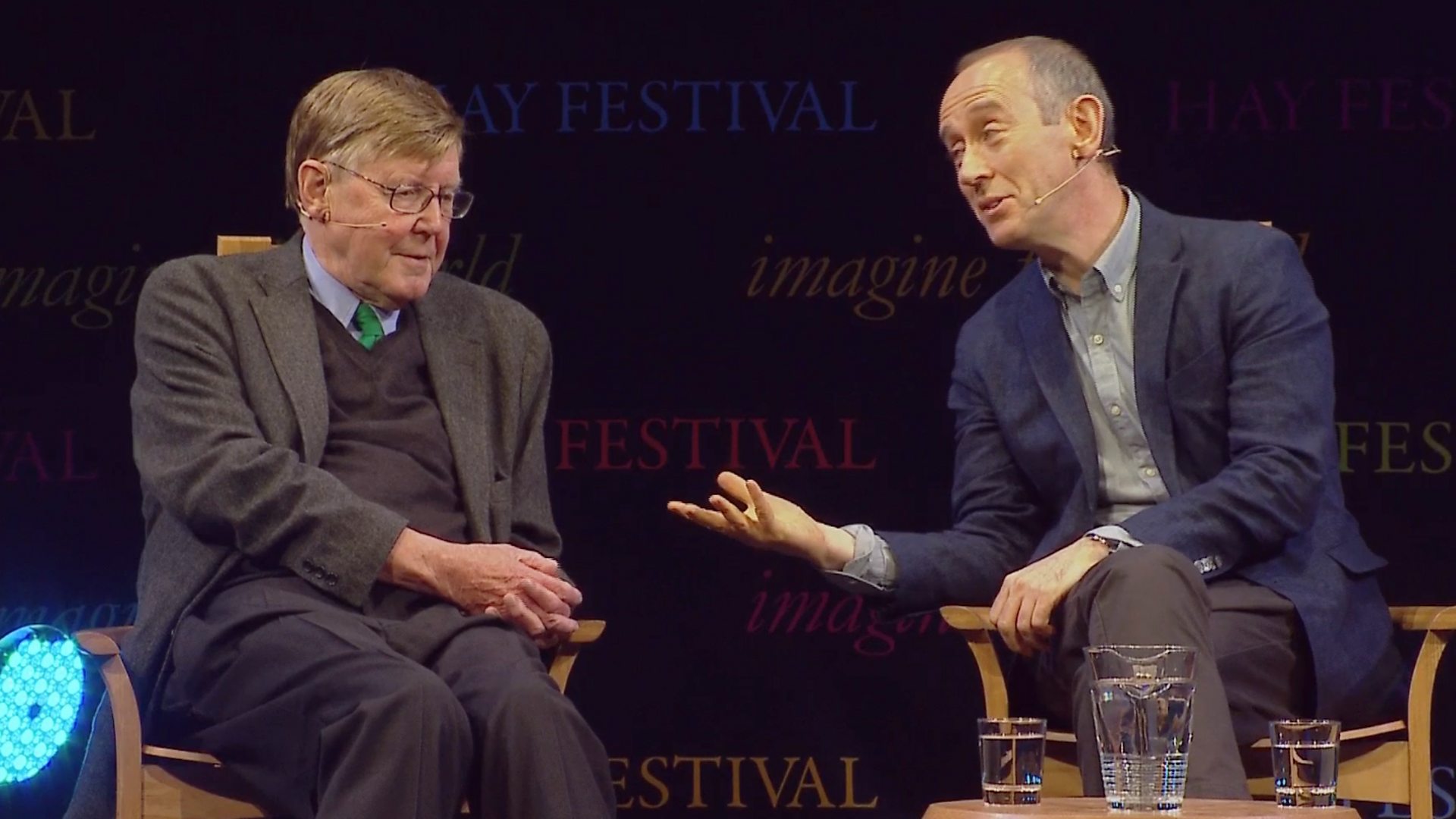
Alan Bennett and Sir Nicholas Hytner: Source – BBC (2016)
In his final passage, I feel a sense of hope in Hytner’s words. He is positive about making it through this difficult time and it is encouraging, to think that one day we will return to a time where arts aren’t seen purely as a hobby and politics aren’t intertwined or put up against the freedom of creativity and live performance.
His last thoughts read:
‘… I hope that somebody will one day pick up this book in a second-hand bookshop (assuming they still exist), leaf through the introduction, and vaguely remember that there was once a terrible virus that brought nearly everything to a halt. And I hope she buys the book, because two short plays by Alan Bennett will always be worth having. And then she joins her friends in the bar next door, and together they walk through the crowded streets to the theatre.’
Up next in my ‘Thespian Thoughts’ series, is my review of the second monologue that I saw at the Bridge Theatre.
After a quick change of the set – the sink and kettle are removed, and an array of chairs added – we are graced with another one of Alan Bennett’s monologues, and this time it is Bed Among the Lentils. This piece is legendary within Bennett’s repertoire, known for previously having been performed by Dame Maggie Smith in 1988, on the BBC. However, this time round, the piece is being performed by Lesley Manville… who takes on the challenge and definitely wows the audience!
The Bridge Theatre’s Repertoire of Plays
In Bed Among the Lentils, we meet Susan. She is a vicar’s wife… although even to label her as that is tricky. I got the sense that she doesn’t like to feel owned by her husband, plus she pretty much admits that she doesn’t believe in God. Susan talks about her life – it sounds dull and boring, unadventurous and her life is generally confined to the church.
However, eventually Susan begins to move away from her role as the stereotypical vicar’s wife – she skives from evening prayer, doesn’t care much care for the flower arranging and absolutely despises the clergy full of her husband’s faithful followers. Instead, she begins venturing into Leeds, where during her dalliances, she discovers a small corner shop owned by a young man, whom she refers to as Mr. Ramesh. Soon enough, after every inconvenience and every snide comment from Mrs. Belcher or Mrs. Frobisher, she finally snaps… and her relationship with Mr. Ramesh becomes… intimate. Good for Susan, I say!
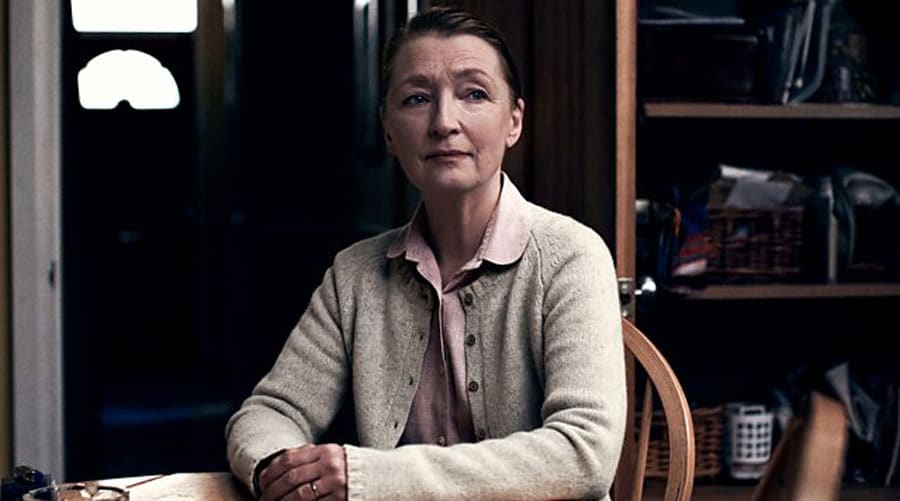
Lesley Manville as Susan, in ‘Bed Among the Lentils’
But that is not the whole story…
Throughout the entire piece, you get a glimpse of a wine bottle or hear a clink of something from a carrier bag and during her time with Mr. Ramesh, it is revealed that she is an alcoholic. Not only does Susan battle with her commitment to the church, but also with her commitment to the bottle. Luckily, her guardian angel, Mr. Ramesh convinces her to seek help – which she does. By the end of the piece, we hear of Susan’s AA meetings. Mr. Ramesh has travelled back to India and her husband is taking all the credit for helping his poor alcoholic of a wife. I can’t help but feel sorry for Susan – she is trapped, unhappy and her spark of adventure is over. She is back at where her story started – in an uncomfortable marriage although this time, she is a bit more sober.
Lesley Manville captured Susan extremely well in this performance – she really convinced the audience that Susan was a timid, plain old women who pretty much served no higher purpose other than her husband. At the same time, she also made sure that the comic sections and taboo parts (like sleeping in a store room with Mr. Ramesh…oops), were strong and heart-warming for the audience. Also, Manville moved around the set effortlessly (her monologue featured more costume changes and intervals where the set was altered) and managed to keep the audience intrigued, despite the background action. In particular, I think Manville portrayed Susan’s calm exterior persona very well, but then was able to relinquish her inner rage as well. The sections which featured pure irritation and a sense of entrapment were really strong.
Without a doubt, the monologue/one-character play form is so brilliant here. We get to see two sides to Susan – the one society sees and her actual personality. Bennett captures this inner conflict so well through his language, sequencing of events and the digressions Susan makes. Especially, with this performance, Manville heightens the emotion really well and the audience clearly see this infuriating division of the self.
(This monologue was the second of a double-bill – the first being The Shrine. If you would like to read my piece on The Shrine, performed by Monica Dolan, then you can click here.)
The Shrine was the first of eight Alan Bennett’s monologues to be performed live, at London’s Bridge Theatre. This piece is one of Bennett’s newly written monologues, which was first seen on the BBC during lockdown, along with An Ordinary Woman – however, The Shrine is the only one of the two being performed. The one-character play has been paired with Bed Among the Lentils, and is the first of four double-bills being performed in the Bridge’s socially distanced auditorium. This double-bill is still being performed, for the next week (click here for more information).
The Bridge Theatre’s Repertoire of Plays
Monica Dolan took to the role of Lorna, a recently widowed woman, who is grieving over the loss of her husband, Clifford. After being involved in a motorcycling accident, she visits the spot where he was killed. She becomes highly invested in this place, building her own seat from things she found in the garage and imagining which tree he had hit. She makes sure to preserve this ‘death place’ – making it into a shrine of some sort. After weeks of obsessing with this spot, run-ins with the police and even a motorbiking Reverend passing by, she comes across a woman leaving some flowers. She claims that she knew ‘Cliff’, a high adrenaline junkie, whom she used to share a bacon and egg sandwich with. For Lorna, Clifford had been the everyday husband, who used his motorcycle to go bird watching, and ate the mozzarella, avocado and tomato sandwiches she made for him. She can’t help feeling saddened at not knowing who Cliff really was…
By the end of the piece, Lorna tries to move on, accepting that her husband may not have been all that he seemed to be – that he had this other identity and it was okay. She makes his helmets into hanging baskets for the garden, and leaves the audience feeling sorry for her. The ending, despite being criticised as anti-climactic, I think really sums up the uncertainty of life, the accidents which can involuntarily happen and the mystery of people we meet along the way.
Having moved from screen to stage, I think the live performance of The Shrine comes across as more comic that disastrous and serious in tone – Dolan received some really heart-felt laughter during her performance. Lines such as ‘the sheep… they know me now’ and when responding to whether she wanted counselling, Lorna replies ‘who does that, the RAC?’ were just some of the many stand-out lines of Bennett’s monologue.
I think it definitely felt more comfortable laughing with everybody when the piece is being performed live. Sometimes when a piece is so laden with emotion, you don’t always know when it’s appropriate to laugh – being with others definitely normalised the situation a bit more. Also, arguably, this production was a lot less dark than the BBC production, and I think this highlights that grief can come in many ways and trigger different reactions – even comic ones! At one point, Lorna dresses in a bright, orange hi vis, beside the shrine and kneels with the hope people will notice the space. Lorna’s way of connecting and understanding Clifford’s death is not appreciated by others, but I think the comic value can almost bring us back to see the humanity of Lorna and that her reactions are valid. By the end, perhaps Dolan’s tone is more optimistic than that on screen.
Dolan is excellent in this role – emotional, heart wrenching, and performs the whole things with an excellent Yorkshire accent! She had every audience member enthralled by her performance, even during the intervals of the Talking Heads music (composed by George Fenton) and the typical Bennett tea-making scenes. Dolan hit all the laughs in the right place, whilst still maintaining an extreme amount of emotion and composure. Most significantly, Dolan illustrates that grief is not always the same for everybody and that Lorna’s definitely ‘wasn’t typical’. This performance was a perfect way to kick off the Bennett repertoire at the Bridge, addressing moving and emotional themes like grief and death. Monica Dolan really brought so much emotion and energy into this performance.
To kick off my ‘Thespian Thoughts’ series, I thought that I would blog about what it was like to experience the theatre with new kind of set up, thanks to the coronavirus pandemic. Last week, after having not stepped into a theatre for 195 days, I finally went to see my first socially distanced live performance. I travelled down to London’s Bridge Theatre, and got to see how the theatre environment had completely changed… it was different, exciting and unexpectedly… quite emotional!
Outside of the Bridge Theatre – located on Potters Field Park
The Bridge Theatre is one of the first theatres to reopen its doors to the public, and begin showcasing works in a socially distanced manner – they have adapted their flexible auditorium, converting it into a space with 250 socially distanced seats.
For the past few weeks, the theatre has been hosting a collection of monologues and one-character plays, performed (and in some cases, written) by an array of Britain’s finest acting talent. The repertoire kicked off with Beat the Devil, written by David Hare and performed by Ralph Fiennes. This piece has already received high praise and four-star reviews. Currently underway are Alan Bennett’s Talking Heads – they were seen on TV earlier this year, having been filmed and produced during the pandemic, by the BBC. Eight of the twelve monologues are being performed in double-bills at the Bridge Theatre, including one of Bennett’s new pieces, and some of his most prestigious work. The cast include: Monica Dolan, Tamsin Greig, Lesley Manville, Lucian Msamati, Maxine Peake, Rochenda Sandall, Kristin Scott Thomas and Imelda Staunton. Later on, in the season, the Bridge will host more distinguished monologues, including Quarter Life Crisis – written and performed by Yolanda Mercy. As well as, Nine Lives, written by poet, Zodwa Nyoni and performed by Lladel Bryant.
The Bridge Theatre’s Repertoire
Of course, in order to showcase such works, the Bridge Theatre have worked hard to enforce social distancing measures and enable people to finally get back into theatre. Here are some notable changes that have been made:
The first change is have staggered times of entering the theatre. This helps to reduce crowding, inside and outside of the building, as well as allowing people to meet the ‘two-metre’ rule at all times. When booking tickets, you are allocated a certain time to arrive. Subsequently, this allocated time also determines what time you enter the auditorium.
The Bridge Theatre’s Foyer
Another smaller, yet very efficient change, is to allow audience members to pre-book drinks for before and during the performance – on the morning of your performance, the Bridge text message you with a link to do this. This message also reminds you of your allocated time, the door which you should enter when going into the auditorium and your seat numbers. This isn’t a huge change, but I thought that it was really effective and helped you prepare for an overall smoother and less stressful visit.
Upon arrival, staff also explained how to maintain social distancing with their one-way system, about the required temperature check and when/where to wear your mask.
Then, onto the actual performance…
Inside the Auditorium
At all times, you are asked to wear a mask when in the auditorium – understandable, especially as the performers are not wearing PPE. Then, after being called, you can finally go and find your seats. There were a few stewards around the entrances and in front of the stage, reminding people to keep their masks on.
The auditorium was really strange to see!
Hundreds of seats were missing. Not many people were there and it was a lot quieter than your usual theatre.
There were seats in couples, groups of three and some single seats scattered around the space, all maintaining a safe two metres.
After finding my single seat (yes… theatre is just as fun when you are on your own), it was such a surreal experience. For me, it felt amazing to finally be back in this kind of environment and supporting an industry that is suffering immensely due to the pandemic – it gave me a tiny glimpse of hope that the arts sector would make it out on the other side… but, who knows, I may have just suddenly been feeling optimistic because I was sitting in front of a stage.
Also, watching something like Talking Heads (I saw the double-bill of ‘The Shrine’ and ‘Bed Among the Lentils’, performed by Monica Dolan and Lesley Manville – a review will be coming soon), as something which I had both read and watched during lockdown boredom and for dissertation research, everything suddenly felt more real, and it was crazy to have these incredible piece’s being performed in front of me. I think by the time the Talking Heads theme tune began… I was pretty excited!
Of course, there were some downfalls of having to experience the theatre like this. It was less immersive and at points, it was hard to connect with the storylines and the performances, because you were so overwhelmed with this newly founded way of watching theatre. Also, the theatre was still quite bare. Perhaps, naively, I thought more people would be bursting to watch something live (I know, I was!), so perhaps there is still some uncertainty and anxiety about coming back to experience the arts.
There was definitely an added pressure to these performances – for both the audience, to maintain public safety, but also on the performers. I think the actors felt an immense pressure, but also gratitude, with being involved in any kind of live performance – especially when performing such renowned pieces of writing.
What I didn’t expect was the emotion throughout the room. Dolan and Manville were both extremely raw with performing their emotions – their characters were either attempting to overcome grief, or alcoholism and strenuous relationships. I feel that the emotion was heightened given our surroundings and with the themes the pieces both explored, and overall they both gave such heartwarming and beautiful performances. I am certain that everybody at the Bridge Theatre, during every laugh, cry and deep thought, were absolutely thrilled to be able to see such exceptional performances.
Overall, I would highly commend the Bridge Theatre at how they are enabling safe access to the theatre. Every moment you are in the foyer, auditorium or outside of the building, you feel safe. I would definitely recommend going to see a performance at the Bridge, just to attempt to get back into any kind of live performance whatsoever – especially as we need to begin to appreciate such a fragile industry and support it any way we can! These pieces were new and restorative, and after seven months without any in-person theatre… it was absolutely something I needed!
(I have inserted links to the Bridge Theatre and its repertoire throughout the blog – make sure you check them out!)







 Oh! You Little Things