Pandemic Ponderings

Pandemic Ponderings: Day Two – ‘Eureka’ Literature

Photo by Pixabay on Pexels.com

Today, through the break of my publishing lecture, I began to think:

What pieces of literature have inspired me? Or what pieces of literature made me realise that creativity can be kick-ass?!

And here are my results…

Book-wise?

Well, this one is the easiest…. Mrs Dalloway by Virginia Woolf.

Mrs Dalloway - Wikipedia
Mrs Dalloway, 1925

When I first read Woolf, I didn’t like it – there were too many descriptions of nature and not enough action for my liking. But when I got to the end of the novel, I realised that I wanted to know more – and I decided to delve into the world of Woolf!

Looking into Virginia Woolf, her background and her narrative techniques – it suddenly made me realise why she wrote so expressively and so in depth – and wow, the concept was so beautiful! I realised that literature and stories are more than plot… it is about the physical construction, the consciousness and something much deeper and fragmented – like life and the mentality.

This first Woolf novel opened the proverbial portal to the Bloomsbury Group for me, and the ideas of freedom of voice; the body; the mind and creativity!

Theatre-wise?

I can’t explicitly remember the first play I read, or saw… but I do remember my first ‘non-musical’ piece of theatre that I saw in London. In 2017, I saw Twelfth Night at the National Theatre – it was a trip with my A Level group, on my birthday and I hobbled down the Southbank on crutches – it was definitely a visit to remember!

Twelfth Night with Doon Mackichan and Tamsin Greig
Twelfth Night Production images
Photos by Marc Brenner

For me, this production of Twelfth Night showed me that theatre does not have to follow any rules! They changed the genders of the characters, introduced a pub and a pool, wore bright pink suits, and as a result it filled the Olivier theatre with so much laughter. I saw, for the first time, that theatre had the ability to bring people together and accumulate such an amazing reaction.

The set was also incredible – looking like a staircase, but then breaking apart and making separate room…. and acting as a ship. It was incredible! Theatre can be so unique and whilst studying in London, I have made sure I visit as much as possible!

Check out one of my favourite parts of this performances, here.

*I am currently writing a review on this performance… so watch this space!

Poetry-wise?

Me and poetry have a strange relationship. I don’t mind studying it, but we study mostly dead, white men and when I try and write poetry… well, let’s not go there! I don’t know if I have had a ‘eureka’ moment with poetry… yet, but here are some poems, which have stood out to me over the years:

Sonnet 124 – William Shakespeare

If my dear love were but the child of state,
It might for Fortune’s bastard be unfathered,
As subject to Time’s love or to Time’s hate,
Weeds among weeds, or flowers with flowers gathered.
No, it was builded far from accident;
It suffers not in smiling pomp, nor falls
Under the blow of thralled discontent,
Whereto th’ inviting time our fashion calls:
It fears not policy, that heretic,
Which works on leases of short-number’d hours,
But all alone stands hugely politic,
That it nor grows with heat, nor drowns with showers.
   To this I witness call the fools of time,
   Which die for goodness, who have lived for crime.

This is one of my favourite poems. It is Shakespeare. It has beautiful images of nature. It is a highly neglected sonnet!

Twat – John Cooper Clarke – Caution: Not for the faint-hearted!

I was first shown this in my GCSE class by my crazy English teacher… (we probably shouldn’t have been shown this, but at least she got me to remember a poet!). I love John Cooper Clarke and we definitely need to appreciate writers outside of London, just as much!

She Put on Her Lipstick in the Dark – Stuart Dischell

The poem can be found here: https://www.theatlantic.com/magazine/archive/2007/12/she-put-on-her-lipstick-in-the-dark/306439/

I loved this poem because it explores the taboo but it can be interpreted as comic… also, the poet followed me on Twitter! I loved seeing this new form of poetry, and it was the only poem I really enjoyed from my first year of university (but don’t tell my lecturers!).

Pandemic Ponderings

Pandemic Ponderings: Day One – Eavan Boland

Day One – Eavan Boland

I first read Eavan Boland’s poetry when I was 16 years old in an A Level English class. I was asked to produce a presentation on her poem ‘Inheritance’, about the structure, rhythm, metre and all the stuff which makes learning poetry feel like a chore…

Sadly a couple of days ago, it was announced Boland had passed away and it made me think of her poetry that I had studied. What I strongly remember about this poem is how it spoke about hierarchy, patriarchy and Boland’s exploration of passing physical and mental knowledge down through generations. I remember reading about her position within a male-dominated Irish literary sphere – she spoke about identity and power, yet used beautiful images of nature and personal experience, to capture her thoughts. She disrupted stereotypes and I loved it!

So… when her poem came up on the AS exam, I was more than happy!

The A Level curriculum was flooded with renowned poets, like Carol Ann Duffy and Simon Armitage, and perhaps before I didn’t see how captivating and meaningful Bolan was with her contribution to Irish Literature. I wish A Level English Literature would let students explore more than just poetic devices – the mechanics – and see how vast and powerful these pieces of poetry can be within literary spheres.

‘Inheritance’ from my copy of Poems of the Decade

Here is the poem I studied for A Level… it definitely has some resonance with recent events.

As a read on Twitter about Boland:

‘Eavan Boland…Rest in Power’.

Pandemic Ponderings

Pandemic Ponderings

Photo by Dominika Roseclay on Pexels.com

“Invention, it must be humbly admitted, does not consist in creating out of void but out of chaos.”

Mary Shelley

Mary Shelley said that creativity should be produced out of chaos – and what is more chaotic than living through a pandemic?

Over the past few days, as boredom engulfs even the most introverted of us, I have seen people online tweeting small highlights of their days. I have read tweets about attempting to be a hairdresser, baking copious amounts of banana bread, finally reading that book which gathers dust, and even how people get a thrill from waving at their neighbour! This glimpse allows people to stay connected and reflect on the small things that brighten their day.

Thus, I have decided to use this idea and blog my Pandemic Ponderings daily. This could be absolutely anything – an observation, a thought, a quote, an image, or even a bunch of unrelated words. I want to try and remain creative and critical, even in these circumstances, and attempt to capture the state of mind in within this new normal!

I do not know if this idea will succeed or if the pandemic will finally claim my motivation, like it has done with so many others – I just know that out of this situation, we should embrace the dysfunctional and use this time to produce something wonderful and something different!

Theatre

Shakespeare… or is it Shakspere?

On pretty much any English Literature syllabus, you will find a William Shakespeare text – let’s be honest, most of the time it’s Romeo & Juliet, the language makes students give up reading it and theatre is just not appreciated as much in lower education! Thus, in an attempt to show how interesting and funny Shakespeare can be, here are my top five favourite plays…

1. Twelfth Night

Twelfth Night” at Usborne Children's Books
Source: Usborne Publishing

My favourite Shakespeare play is Twelfth Night – it’s full of cross-dressing, humiliation, wit, confusion, farce, role reversals and overall, just makes you laugh! The play follows Viola, a character who must dress up as a man in order to succeed on her own (after the supposed death of her brother) and she then falls in love with her master. Also, to add to the confusion, her master, Orsino is in love with Olivia, a young countess, and Olivia is in love with Cesario (Viola’s alter-ego)… confused much?

This play is more than just the average love triangle – we are introduced to more characters who are romantically and familiarly linked to Viola, Olivia and Orsino. Including, characters from different classes, characters who wholly inhibit stupidity, and characters who embarrass themselves purely at the folly of others. There is constant action in this play – and Shakespeare’s introduction of music, laughter and colour makes Twelfth Night memorizing.

After reading this Shakespearean comedy, you will never want to go back to a tragedy…

Shakespeare Solved: Shakespeare & Twelfth Night's Malvolio
The famous yellow-stocking scene with Malvolio (Stephen Fry) and Olivia (Mark Rylance)
Source: Shakespeare Solved on Blogspot

‘If music be the food of love, play on’

Act One, Scene One

‘Some are born great, some achieve greatness, and some have greatness thrust upon ’em.

Act Two, Scene Five

2. A Midsummer Night’s Dream

Theseus | fictional character, “A Midsummer Night's Dream ...
The 2001 production of A Midsummer Night’s Dream, with Dawn French and Jemma Redgrave
Source: britannica.com

A Midsummer Night’s Dream introduces the land of the faeries to Shakespeare’s repertoire. Again, Shakespeare uses the complicated love-triangle to steer the action with a bit of cat-and-mouse action thrown into the mix. However this time, two lovers, Hermia and Lysander run away together after being told they are not allowed to marry, after being told that Hermia must marry Demetrius.

They flea to the woods, where King Oberon and Queen Titania live, along with their dutiful fairies. A blissfully positive and vibrant place… until the use of magic and potions come into play, changing the rules and altering character relationships. A Midsummer Night’s Dream explores the child-like imagination of Shakespeare and this meeting of the fantastical with the difficulties and realities of love and the everyday, is why it is such a popular play.

A Midsummer Night's Dream - Wikipedia
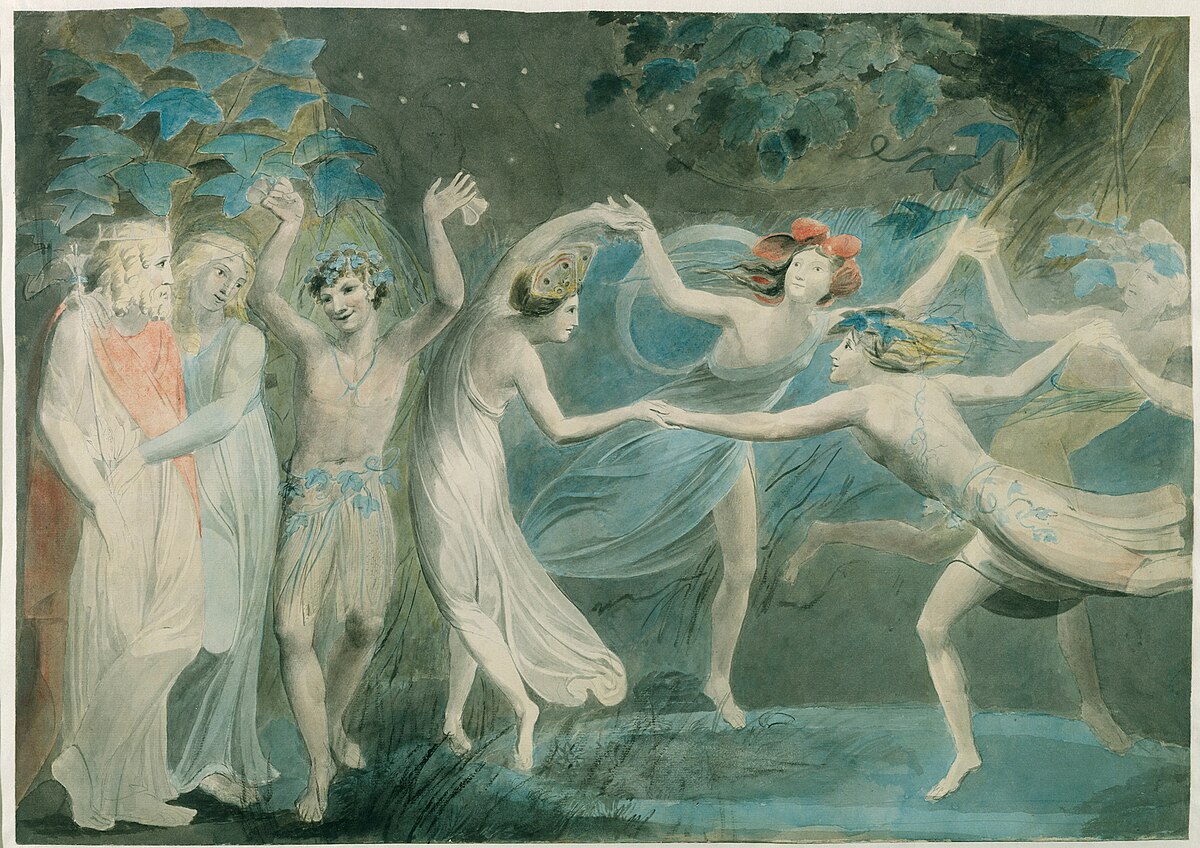
William Blake’s artwork of A Midsummer Night’s Dream, Oberon, ‘Titania and Puck with Fairies Dancing’
Source: The Tate Online

‘Though she be but little, she is fierce!’

Act Three, Scene Two

‘There sleeps Titania sometime of the night,

Lulled in these flowers with dances and delight.’

Scene Two, Act One

3. Hamlet

Image
Source: Shakespeare’s Globe – Twitter

When I first read Hamlet, I didn’t know what all the hype was – I think it was because out of every play my lecturers could have chosen, they chose a tragedy! I liked the play, but it would never overtake the likes of Twelfth Night or A Midsummer Night’s Dream. Until recently… The Globe have released the 2018 production of Hamlet online and wow, I suddenly understood why this play is so popular.

The play is about Prince Hamlet of Denmark, who desires to reveal the identity of his father’s murderer – his uncle, who has become the new King ( and who has also married Hamlet’s mother! – I know, just as confusing as Twelfth Night). Upon seeing the ghost of his father, Hamlet is driven to madness about his father’s murder. Perhaps, before I did not see this ludicrous behaviour when just reading the play – but when I saw Michelle Terry (pictured above) in the titular role, she screamed madness – from her clown make-up, the way she ran around the stage to how she wore her braces over one shoulder. It was so amazing to physically see the torment and tribulations the character of Hamlet must go through, when actually watching a production. Also, luckily Shakespeare throws in a couple of jokes, for good measure, so you can definitely laugh along with all of the madness…

Gregory Doran 2008 production | Hamlet | Royal Shakespeare Company
David Tennant as Hamlet
Source: Royal Shakespeare Company
A few female Hamlets don't threaten the legacy of Shakespeare - he ...
Maxine Peake as Hamlet
Source: inews.com
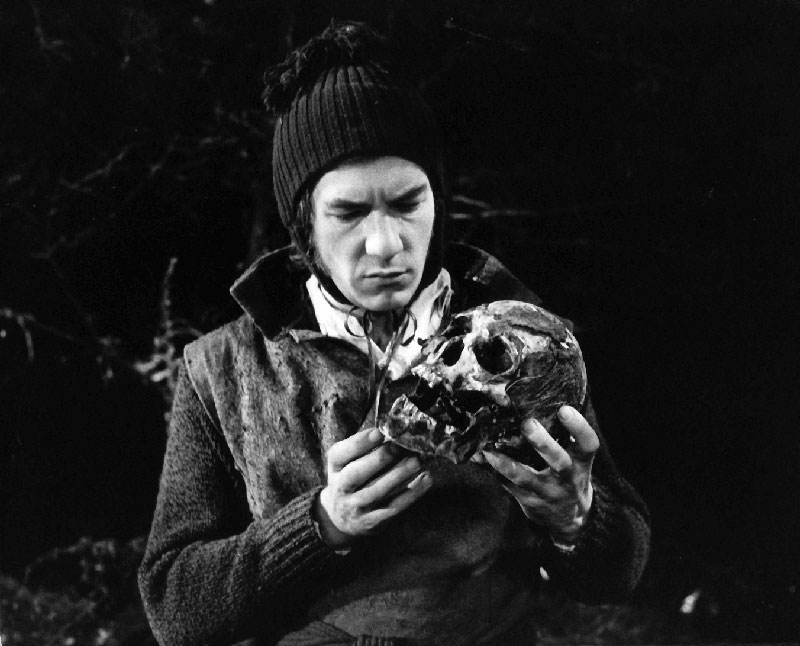
McKellen's Hamlet | Shakespeare Geek, The Original Shakespeare Blog
Ian McKellen as Hamlet
Source: Shakespeare’s Geek Blog

‘To thine own self be true’

Act One, Scene Three

‘To be or not to be, that is the question’

Act Three, Scene One

4. The Tempest

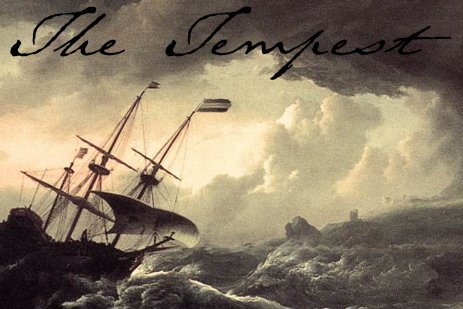
Imagine The Tempest | Exploratory Shakespeare
Source: Exploratory Shakespeare

Strangely enough, this was one of the first Shakespeare text I was introduced to – not Romeo & Juliet or Macbeth! It was year seven when we first had to battle Shakespearean prose, but luckily we had those copies of The Tempest with annotations and explanations down the margins. It showed me the power of theatre – that it was something meaningful and could contain tragedy, love, magic and relationships all in one text.

The Tempest is about a father and daughter duo, Prospero and Miranda, stranded on a island, along with their servant, Caliban and a spirit, Ariel. Prospero, conjures up a tempest, to strand a ship which is out at sea. We witness the revealing of why Prospero and Miranda are on the island, a blossoming romance and a plot to kill the King. This play is loaded with action and constantly questions morals – I think it is a great play to start the discovering of Shakespearean theatre and begin to ponder morality and social behaviour.

The Tempest review – Helen Mirren, Tom Conti, David Strathairn ...
The Tempest film (2010) – starring Helen Mirren as Prospera, a gender-swapped production
Source: The List Film

‘O, I have suffered

With those that I saw suffer.’

Act One, Scene Two

‘As you from crimes would pardoned be,

Let your indulgence set me free.’

Epilogue

5. Macbeth

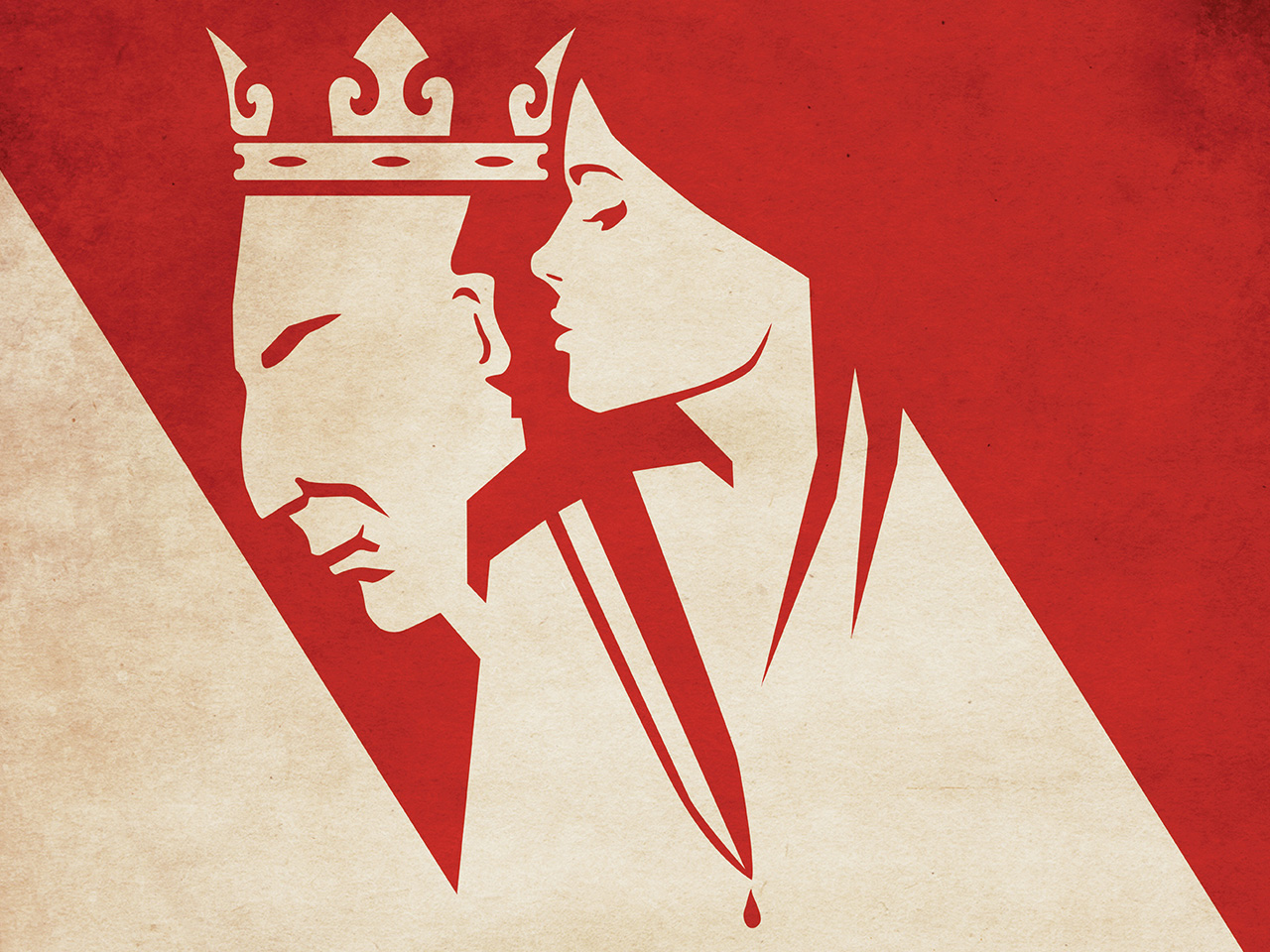
A Brief Look at Feminism in Shakespeare's "Macbeth" - Inquiries ...
Source: Inquiries Journal

Finally, the last play in my top five is the classic… Macbeth. This blood-thirsty and psychological tragedy which features death, ghosts, witches and a lot of hand-washing – it is a definite favourite within secondary schools. Arguably, this is one of the most recognisable plays – from Macbeth’s soliloquy with a dagger to the chanting of the witches around a cauldron.

For those who haven’t read Macbeth, the title character is told by three witches that he will become King of Scotland – Macbeth is already full of himself (Thane of practically everywhere)and his wife, Lady Macbeth is just as ambitious, so they devise a plan to kill King Duncan and take over the thrown… a bloody mess which backfires tremendously. Similarly to Hamlet, we explore the psychological consequences of committing a crime, as well as the revenge many other characters want after this selfish deed is executed.

I enjoy Macbeth because it’s memorable – from the prose, to the the staging of certain productions. Also, it shows a pretty kick-ass villain in Lady Macbeth…

Throwback Thursday: Ian McKellen Was Magnetic in 'Macbeth' in 1976 ...
One of the most famous productions of Macbeth, with Sir Ian McKellen and Dame Judi Dench as Macbeth and Lady Macbeth

‘Fair is foul, and foul is fair:

Hover through the fog and filthy air.’

Act One, Scene One

‘Is this a dagger which I see before me,

The handle toward my hand? Come, let me clutch thee:

I have thee not, and yet I see thee still.’

Act Two, Scene One

What is a better way to begin studying the world of theatre? Probably with the most renowned playwright ever! It is so important to see the developments in theatre and origins of amazing drama – from Shakespearean characters to the crazy amount of language he invents.

Shakespeare’s plays are witty, tragic, moving and can be watched by anyone and everyone.

Activism · Feminism

Kick-Ass Women of Literature, who need to be heard…

Why is it that the majority of what we study, on English Literature courses, are the writings of dead white men? Yes, they’re influential… yes, they have populist opinions tattooed across their dust jackets. But should literature and academia be about discovering new and unheard pieces of writing, as well as looking at the history of books, poetry and theatre? Well, I think so! Thus, in my abundance of boredom, I have decided to compile a list of female writers and creatives, who often get ignored or put aside, and who I think rock at what they did or do:

Catherine Blake

an excellent saleswoman”: The Last Years of Catherine Blake ...
Source: The Blake Archive

Catherine Blake – famously known as the wife of William Blake. She played a huge role in her husband’s work – from helping to paint his pieces, the print process of his plates, as well as handling finances and the household. She worked on every aspect of creating these masterpieces, including, colouring the cover of Europe: A Prophecy . Even after her husband’s death, Catherine continued to print William’s poetry and art. Catherine also wrote some of her own material.

Last September, the Tate Britain held a William Blake exhibit and highlighted the contribution Catherine Blake gave towards the production of his work. Sadly, the exhibit closed in February, but information about Blake’s artwork can be found here.

What I like about the Blake’s are the mutual respect between the two – William was definitely thankful for his wife’s help. Supposedly his mythological figure, Enitharmon is based on Catherine – she is a figure who represents beauty and inspiration. Catherine, without a doubt, contributed hugely to his success.

For more information about Catherine Blake – check out this recently published Guardian article:

https://www.theguardian.com/culture/2019/sep/07/william-blake-wife-catherine-brought-colour-works-of-genius-tate-britain

Virginia Woolf

Virginia Woolf's Consciousness of Reality | The New Yorker
Source: The New Yorker

It wouldn’t be a successful blog about female writers without mentioning Virginia Woolf. I am biased, in the fact that Woolf is my favourite writer, but for me she is beautiful in her creative technique, her narrative voice and the issues she writes about.

During her life, Virginia Woolf prolifically wrote diary entries, essays, short stories, novels and even a play, Freshwater (which I don’t think get’s mentioned often enough). She was born into a family of strong voices – those enamored in the world of politics, art and diverse lifestyles – and this definitely echoes in her own works. Woolf discusses issues with gender, sexuality, love , psychology, mental illness and so much more…

For me, her life which fluctuated between ups and downs is why she is so unbelievable as a writer. She had experienced tragedy, mental blocks, yet still fought through to produce amazing pieces of literature. This space is definitely not big enough to discuss the importance of Woolf, as a female writer, a Modernist and for English Literature on the whole.

She is an unbelievably talented artist, who amazes her readers every time a copy of Mrs. Dalloway, Orlando or To the Lighthouse, is picked up.

For an article on her innovative stream of consciousness style, see this article:

https://www.newyorker.com/magazine/1954/03/06/a-consciousness-of-reality

May Sinclair

May Sinclair | World War I | Discover War Poets – WW1
Source: warpoets.org.uk

May Sinclair was a writer and suffragist, who wrote during the Modernist era – although was a generation older than most Modernists. Only recently have I read Sinclair’s short story, The Life and Death of Harriett Frean, which explores ideas of femininity; generational difference; love and class. Sinclair grew up as the provider for her family, through her writing – showing the intellectual ability of women and incompetence of men – an idea frequently conveyed in her writing. She is also known for her poetry and production of poetry, she often wrote for literary journals – she was the person who coined the phrase ‘stream of consciousness’ in relation to Dorothy Richardson’s writing – an idea which would later be attributed to Virginia Woolf and James Joyce’s writing.

To read Sinclair’s journal piece on Dorothy Richardson, see:

The Egoist Journal, Vol. 5, No. 4 – @ http://www.modjourn.org

She also fought heavily for Women’s Rights. She was a member of the Women’s Suffrage Movement – and was remembered by Sylvia Pankhurst after her death. She also engaged in modern psychological studies, having read Jung and Freud frequently. She was also a supporter of the Medico-Psychological Clinic and Dr. Jessie Murray, where work focused on supporting those suffering from shell shock. May Sinclair supported minority groups, fighting for a dominant voice within her writing and society.

Caryl Churchill

Caryl Churchill Playwright | Best Caryl Churchill Plays
Source: StageMilk.com

My next ‘kick-ass’ woman is playwright Caryl Churchill. Her works include, Top Girls, Cloud Nine, and Serious Money – plays written in the 1970s and 1980s. She explores feminist and political ideas through her creations, and is experimental in character, language, setting and time. Churchill is very imaginative and out-going in her images, and her questioning of forms and structures are what makes her stand out within the theatre sphere. Churchill challenges patriarchal structures, and perhaps she wouldn’t like to be labelled as a female playwright – but for theatre and female writers alike, she has definitely been influential – and for me, interested in theatre criticism and dramatically- she needed to be included on this list.

Churchill, who is now 81, has written prolifically throughout the years – her writing has been shown and adapted internationally and has won her an endless list of awards, including a Laurence Olivier Award. One of my favourite plays, Cloud Nine completely turns the form of theatre on its head and is when I realised theatre had the power to generate so much discourse and question structures as much as prose has done, over the years.

Churchill is described as ‘theatre’s great disruptor’ by Michael Billington in a Guardian article written to celebrate Churchill’s 80th birthday in 2018 (which can be found here), and for me, her challenging of tradition, conventional theatre and staging is why she is so intriguing.

Feminists everywhere should read her plays!

Bernardine Evaristo

Bernardine Evaristo - Bernardine Evaristo
Source: bevaristo.com

I first discovered Bernardine Evaristo in year one of my BA English Literature degree. We read Mr. Loverman (which you can buy here) – it explores the character, Barry who is 74 and secretly gay. Evaristo’s recognisable London setting, unique characters, and realistic events made me enjoy a piece of modern fiction (for the first time, in a long time). Many of my lecturers are in the same circle as her, so it felt like we got to know the book even better, through these connections. Her activism, writing black protagonists, and about cultures which are excluded within the publishing industry, are embraced within all her writing.

Coincidentally, a few months ago, her new novel, Girl, Woman, Other, gave her more acclaim – it won the Booker Prize and was one of Barack Obama’s Top Books of 2019 – and it was so thrilling to see Evaristo come to fame overnight.She has such a strong and commanding voice, and should definitely be read by everyone – to understand the entirety of London and its diverse culture. Her voice is alive in academia, creative writing and extremely relevant in today’s world…

Find her twitter : @BernardineEvari

Popular Fiction · Reviews

Oryx & Crake – Terrifying in today’s world…

It cannot be denied that Margaret Atwood is infamous for her speculative and dystopian fiction – most commonly for her masterpiece, The Handmaid’s Tale and its recent follow-up, The Testaments. Her imagination is fierce – her prose somehow hook you despite the disturbing themes and fearful future that is proposed (see my previous blog here, for more on this subject). But very recently, I have read her novel Oryx & Crake, which is a part of the MaddAddam trilogy. It shocks, it questions, it compels you to keep reading…

Image

Oryx & Crake, begins with the character, Snowman – a man alone in a destroyed world, who wears a filthy bed sheet and whose only company are The Crakers and the voices inside his head. As the novel continues, we discover who Snowman is, his background, his schooling, his relationships with friends, family and lovers, and most importantly how the world came to be the way it is…

But what is so disturbing about it, is reading it into today’s environment. Here are some themes, and why it was a terrifying read in today’s social, political and environmental climate:

Disease

Oryx & Crake is all about trying to improve what we already have – whether this is our appearance, enhancing bodies, and even creating strange, hybrid creatures – all of which seem completely useless to me. Despite this attempt to immortalise humanity and inscribe perfection onto the world, society is struck with illness which has deliberately been engineered by the antagonist.

I couldn’t help but think that this idea of illness overcoming the population is highly significant today. Knowing about the coronavirus and how it is overwhelming the world, suddenly made this read very real – dystopian stories must be recognisable, as well as being shocking and absurd, but the ‘recognisable’ in this arguably hits very close to home.

Contamination

Images of cross-contamination make this story extremely noticeable. From the chaos of the news, the fleeing of people from large cities, to the rapid rate of infection. This most disturbing image was of Snowman rummaging in the house of a family which had been killed by the disease – looking for food and a new bed sheet to wear. Snowman questions the morality of his selfish behaviour and whether he should take a dead man’s clothes.

Again, remnants of pandemic, infection and social fear are conjured up by Atwood – terrifying and very prominent today.

These next two topics may not be as significant in today’s climate – yet due to what I have observed in the last few months, for me it still is of major importance. Obviously, Atwood is aware of these themes cropping up – and I really do think it is something important to highlight within this piece of fiction.

Educational Institutions

Snowman, in his previous life (when he went by the name, Jimmy) went to the Martha Graham Academy for his version of higher education. This school is for the humanities and arts, which in Atwood’s world and arguably ours, is looked down upon – being considered useless and second to science.

Unlike Jimmy, his best friend, Crake, is a high achiever and goes to the top school, the Watson-Crick Institute, designed for the sciences. Students at this institute are immediately positioned on top of the hierarchy. This next generation of scientists are glorified for making hybrid animals, false identities and their snobbish behaviour. Even Crake sees Jimmy as inferior – perhaps society has conditioned him to think this way?

This ranking system and opinion of arts being of lesser importance, definitely echoes today’s society – people like to think that this isn’t the case today but the academic ranking and white privilege within the British educational system is still shocking. There are universities (Oxford and Cambridge spring to mind) which battle for academic reputation and prestige – they are labelled as top-dogs – whilst smaller universities receive no acclaim. Smaller and non-Russell group universities explore similar topics, are diverse, and are flooded with gifted innovators, creatives and critics. After my visit to the University of Oxford, and being put down and judged for what university I attend and what course I study, I definitely knew that a smaller, diversified and overall happier learning environment was so much better.

And as for the arts and writing being seen as less important, well that’s another blog post entirely…

Sexualisation and Pornification of Children

This is a major theme within the novel and it is how we come across the title character, Oryx…

Atwood illustrates this obsessive and almost emotionless relationship to porn – she highlights the absolute ridiculous access young people have, thanks to the internet and the graphic material it contains. Snowman and Crake, when they are younger, spend their time watching dark material and reacting as if it is normal, comical perhaps. She definitely highlights how society is acclimatised to this exposure. The characters see all kinds of material, including sexual engagements with children… and here we meet Oryx – a character who, from a young age, is manipulated and abused by adults. It leads to her not knowing anything other than sex – she defends her abusers and struggles to see the faults in this exposure.

I recently read ‘The B*easts’ by Monica Dolan ( see my review here) which explores what it is like for a child, after they have been exposed to sexual behaviour and pornification of media, from a young age – and it really resonated well with this piece.

Overall, I thought this was a standout piece – it’s scary nature and strangely current issues is what got me hooked reading it. Atwood should definitely be recognised for this trilogy, as much as The Handmaids Tale – it is just as brilliant and I would definitely recommend.

You can find more information about the MaddAddam Trilogy here.